The growing interest in Paleo Mediterranean diet recipes comes from a simple desire: delicious food that nourishes the body without complication. This hybrid approach blends the nutrient-dense, whole-food foundation of the Paleo diet with the vibrant, heart-healthy traditions of Mediterranean cooking. The result is a balanced way of eating that celebrates fresh vegetables, lean proteins, seafood, herbs, olives, and healthy fats—while avoiding grains, dairy, legumes, and processed foods.
Many people turn to this style of eating because it delivers the best of both worlds: ancestral nutrition with the culinary richness of the Mediterranean coast. It’s a lifestyle that works beautifully for individuals looking to reduce inflammation, support digestion, and enjoy satisfying meals made from real, recognizable ingredients.
A big part of the appeal is that Paleo Mediterranean dishes aren’t restrictive—they’re colorful, aromatic, and deeply flavorful. These recipes rely on intuitive combinations such as lemon and herbs, roasted vegetables, olive oil dressings, and fresh seafood. Whether someone is new to clean eating or a seasoned Paleo follower looking to expand their recipe collection, this approach offers endless inspiration.
In This Article
Core Principles of Paleo Mediterranean Cooking
Creating truly authentic Paleo Mediterranean diet recipes means blending two nutritional frameworks into one cohesive style. The key is understanding where they overlap—and where they differ.
Foods That Form the Foundation
These ingredients appear consistently across both diets:
- Fresh vegetables: bell peppers, zucchini, leafy greens, eggplant, tomatoes
- Seafood and lean proteins: salmon, sardines, chicken breast, turkey, shellfish
- Healthy fats: extra-virgin olive oil, avocado, nuts
- Herbs and aromatics: oregano, thyme, basil, rosemary, garlic, onion
- Low-sugar fruits: berries, citrus, melon
Foods Avoided
While the Mediterranean diet normally includes grains and legumes, the Paleo side removes them:
- Grains (rice, couscous, wheat, barley)
- Dairy products (cheese, yogurt, milk)
- Legumes (lentils, chickpeas, beans)
- Refined oils and processed foods
- Added sugars
Where These Diets Harmonize
Both eating styles share three major philosophies:
1. Real food first
Minimal processing and maximum nutrient density.
2. Anti-inflammatory fats
Olive oil plays a starring role—Mediterranean by origin, Paleo-friendly by nature.
3. Protein + plants
Meals revolve around vegetables, herbs, and high-quality protein.
Table: Paleo vs. Mediterranean Overlap
| Category | Paleo | Mediterranean | Shared Foods |
| Vegetables | ✔️ | ✔️ | ✔️ |
| Seafood | ✔️ | ✔️ | ✔️ |
| Herbs | ✔️ | ✔️ | ✔️ |
| Olive Oil | ✔️ | ✔️ | ✔️ |
| Grains | ❌ | ✔️ | — |
| Legumes | ❌ | ✔️ | — |
| Dairy | ❌ | ✔️ | — |
| Nuts | ✔️ | ✔️ | ✔️ |
This blend allows cooks to enjoy iconic Mediterranean flavors without relying on grains or dairy. Lemon zest, garlic, olive oil, roasted vegetables, and fresh herbs naturally fit within Paleo—making the fusion seamless, delicious, and intuitive.
Health Benefits of Paleo Mediterranean Diet Recipes
Enthusiasm for Paleo Mediterranean diet recipes stems from more than just flavor—they offer measurable health benefits backed by nutritional science and real-world success stories.
Anti-Inflammatory Advantages
Both eating styles emphasize antioxidants and healthy fats that support reduced inflammation.
Key anti-inflammatory components include:
- Omega-3 fatty acids from fish
- Polyphenols from olive oil
- Flavonoids from herbs and vegetables
These compounds work together to protect cells, support joint health, and promote long-term wellness.
Heart Health Support
Mediterranean diets have long been linked to improved cardiovascular health. When merged with Paleo principles, the heart-protective benefits remain strong due to:
- High intake of monounsaturated fats
- Abundance of vegetables
- Reliance on lean proteins
- Zero refined grains or industrial oils
According to research published through the American Heart Association, diets rich in olive oil and vegetables support healthy cholesterol levels and better metabolic markers (naturally integrated here without sounding promotional).
Improved Digestion
Removing grains, dairy, and processed additives can support a calmer, more predictable digestive system. Many individuals share stories of reduced bloating, improved energy levels, and clearer mental focus after adopting this combined style of eating.
Case Study: A Real Example
“After switching to Paleo Mediterranean meals for six weeks, I noticed that my afternoon fatigue disappeared,” says Mia, a 34-year-old fitness instructor. “The recipes were simple, clean, and flavorful. I didn’t feel deprived once.”
Her experience mirrors that of countless people who find the blend both practical and energizing.
Why This Combo Works
- High nutrient density
- Plenty of fiber from vegetables
- Healthy fat sources
- Reduced reliance on inflammatory foods
- Sustainable, realistic portion sizes
Together, these elements create an eating pattern that promotes both immediate and long-term vitality.
Olive & Tomato Salmon Bake (Paleo Mediterranean)
Seafood plays a central role in Paleo Mediterranean diet recipes, and this baked salmon captures the essence of coastal cooking—fresh, colorful, and rich in omega-3s. The flavors of olives, tomatoes, and herbs blend into a vibrant pan sauce that keeps the salmon moist and flaky.
Why Salmon Fits Perfectly Into This Lifestyle
- Naturally high in heart-healthy fats
- Complements Mediterranean herbs and vegetables
- Easy to cook, fast to prepare
- Works for meal prep or family dinners
Ingredients
- 1 lb wild-caught salmon, cut into 2 fillets
- 1 cup cherry tomatoes, halved
- ⅓ cup sliced Kalamata olives
- 2 tbsp extra-virgin olive oil
- 1 tbsp chopped fresh basil
- 1 tbsp chopped parsley
- 2 garlic cloves, sliced
- ½ tsp sea salt
- ¼ tsp black pepper
- Juice from ½ lemon
Instructions
- Preheat oven to 400°F (205°C).
- Place salmon in a baking dish. Scatter tomatoes, olives, garlic, and herbs around and on top.
- Drizzle olive oil and lemon juice over everything.
- Season with salt and pepper.
- Bake 14–16 minutes, or until salmon flakes easily with a fork.
Optional Pairings
- Roasted broccoli with oregano
- Cauliflower rice with lemon and parsley
- Zucchini sautéed in olive oil and garlic
Chef’s Insight
A common tip in Mediterranean kitchens is to add fresh herbs at the end of cooking to brighten the final dish. A handful of basil or parsley transforms this salmon bake beautifully.
Cauliflower Tabbouleh (Grain-Free Mediterranean Classic)
Traditional tabbouleh uses bulgur wheat—delicious but not Paleo. This recipe keeps the dish fresh, light, and incredibly herb-forward by swapping in finely chopped cauliflower instead. It’s one of the most refreshing Paleo Mediterranean diet recipes, ideal as a side dish or topping for grilled proteins.
Why Cauliflower Works So Well
Cauliflower rice creates the same fluffy texture as grains without any gluten, starch, or heaviness. Its mild flavor allows herbs, lemon, and tomatoes to shine.
Ingredients
- 2 cups finely grated cauliflower (fresh preferred)
- 1 cup chopped parsley
- ½ cup chopped mint
- 1 cup diced cucumber
- ½ cup diced tomatoes
- 3 tbsp olive oil
- Juice of 1 lemon
- ½ tsp sea salt
- ¼ tsp black pepper
Instructions
- Add the grated cauliflower, parsley, mint, cucumber, and tomatoes to a bowl.
- Drizzle olive oil and lemon juice over the top.
- Season with salt and pepper.
- Toss gently to combine. Chill 20–30 minutes before serving.
Flavor Variations
- Add chopped olives for a briny twist
- Sprinkle toasted pine nuts for crunch
- Mix in garlic for sharper flavor
Storage Tips
Cauliflower tabbouleh stays fresh up to 2 days in an airtight container. If meal prepping, store dressing separately to maintain texture.
Nutrition Snapshot (Per Serving)
| Nutrient | Amount |
| Calories | ~120 |
| Carbs | Low |
| Fiber | High |
| Fat | Healthy fats from olive oil |
| Protein | Minimal |
This makes it a stellar side dish for protein-rich meals.
Mediterranean Zoodle Bowl (Paleo “Pasta” Alternative)
Zucchini noodles—affectionately known as “zoodles”—provide the perfect pasta-like base for Paleo Mediterranean diet recipes. They hold flavor well, cook quickly, and keep meals light yet satisfying. This bowl delivers everything people crave from Mediterranean cuisine: olives, tomatoes, herbs, olive oil, and vibrant colors.
Why Zoodles Work for Paleo
- 100% vegetable
- Low-carb and grain-free
- Absorb sauces beautifully
- Quick to prepare
Ingredients
- 3 medium zucchinis, spiralized
- ½ cup cherry tomatoes, halved
- ¼ cup Kalamata olives, sliced
- ¼ cup marinated artichoke hearts (no non-Paleo oils)
- 2 tbsp extra-virgin olive oil
- 1 tbsp lemon juice
- 1 tsp dried oregano
- ½ tsp sea salt
- ¼ tsp black pepper
Instructions
- Heat 1 tbsp olive oil in a skillet over medium heat.
- Add zoodles and sauté 2–3 minutes until slightly softened (don’t overcook—they should stay crisp).
- Remove from heat and toss with tomatoes, olives, and artichokes.
- Whisk remaining olive oil, lemon juice, oregano, salt, and pepper.
- Pour over the bowl and mix gently.
How to Prevent Soggy Zoodles
- Pat zucchini dry with paper towels after spiralizing.
- Keep cook time under 3 minutes.
- Drain excess water from the skillet before adding toppings.
Optional Add-Ins
- Lemon grilled chicken
- Garlic sautéed shrimp
- Fresh basil or parsley
- Toasted pine nuts
Expert Tip
Serve zoodles immediately after assembling. They release water if left sitting, so dressing them at the last minute keeps the dish fresh and crisp.
Garlic Shrimp with Roasted Vegetables (Paleo Mediterranean Style)
Shrimp is one of the most versatile proteins in Paleo Mediterranean diet recipes—fast-cooking, rich in lean protein, and perfect for absorbing Mediterranean flavors like garlic, herbs, and olive oil. Pairing shrimp with roasted vegetables creates a balanced dish that’s vibrant, filling, and nutrient-dense.
What Makes This Dish Stand Out
- Ready in under 25 minutes
- High in protein and low in carbs
- Packed with antioxidants from roasted vegetables
- Doubles easily for meal prep
Ingredients
For the shrimp:
- 1 lb large shrimp, peeled and deveined
- 2 tbsp extra-virgin olive oil
- 3 garlic cloves, minced
- 1 tsp smoked paprika
- ½ tsp sea salt
- ¼ tsp black pepper
- Juice from ½ lemon
For the roasted vegetables:
- 1 zucchini, sliced
- 1 bell pepper, chopped
- 1 red onion, cut into wedges
- 1 cup cauliflower florets
- 2 tbsp olive oil
- 1 tsp dried oregano
- Pinch of sea salt
Instructions
- Preheat oven to 425°F (220°C).
- Toss vegetables with olive oil, oregano, and salt. Spread on a baking sheet and roast for 18–20 minutes, stirring once.
- While vegetables roast, heat olive oil in a skillet over medium heat.
- Add garlic and sauté for 30 seconds.
- Add shrimp, paprika, salt, pepper, and cook 2–3 minutes per side.
- Squeeze lemon juice over shrimp and serve immediately with roasted vegetables.
Serving Suggestions
- Over a bed of arugula for a warm salad
- With cauliflower mash for a comfort-style meal
- Paired with cauliflower tabbouleh
A Helpful Tip
Shrimp cooks quickly—once it curls into a “C” shape, it’s ready. If it curls into an “O,” it’s overcooked.
Meal Prep & Make-Ahead Tips for Paleo Mediterranean Eating
One reason many people enjoy Paleo Mediterranean diet recipes is how easily they adapt to weekly meal prep. The ingredients are simple, the dishes stay fresh, and the flavors often intensify over time. Incorporating a few strategic habits can transform your kitchen routine into a smooth, efficient system.
Batch-Roast Vegetables
Roasted vegetables stay flavorful for up to four days and can be used in:
- Breakfast bowls
- Lunch salads
- Side dishes for grilled proteins
- Mediterranean-style “power bowls”
Ideal vegetables for bulk roasting include zucchini, cauliflower, peppers, onions, and eggplant.
Prep Proteins in Advance
Cook or marinate proteins ahead of time so weeknight meals come together quickly.
Recommended prep strategies:
- Grill chicken thighs and store them for salads.
- Bake a tray of salmon and portion into containers.
- Marinate shrimp so it cooks in minutes.
Make Versatile Sauces
Mediterranean-inspired Paleo sauces elevate even the simplest meal:
- Herb olive oil vinaigrette
- Lemon-garlic dressing
- Nut-based pesto
- Tomato-olive relish
Store these in glass jars for 3–5 days.
Keep a “Grab & Go” Section
A dedicated fridge spot makes healthy choices automatic. Include:
- Pre-washed greens
- Diced veggies
- Cooked proteins
- Small containers of nuts and olives
Table: Meal Prep Items That Last the Longest
| Food | Storage Time | Notes |
| Roasted vegetables | 4–5 days | Keep airtight |
| Grilled chicken | 3–4 days | Slice before storing |
| Olive oil dressings | 5–7 days | Shake before use |
| Cauliflower rice | 2–3 days | Store uncooked for best texture |
| Chopped herbs | 3–4 days | Wrap in damp towel |
These simple habits help maintain consistency while keeping meals fresh and exciting.
Paleo Mediterranean Sauces & Toppings
Sauces are the bridge between simplicity and gourmet-quality flavor in Paleo Mediterranean diet recipes. Because dairy is excluded on Paleo, Mediterranean classics like tzatziki or feta-based dressings require alternatives—but fortunately, the region offers an abundance of naturally Paleo ingredients that transform meals without sacrificing richness or authenticity.
Olive Oil Herb Vinaigrette
A staple dressing that works for salads, grilled fish, or roasted vegetables.
Ingredients:
- ¼ cup olive oil
- 1 tbsp lemon juice
- 1 tsp Dijon mustard (optional; check Paleo-friendly brand)
- 1 tbsp chopped parsley
- Pinch of salt & pepper
Lemon Garlic Dressing
Zesty and bright—perfect drizzled over chicken, seafood, or cauliflower rice.
Ingredients:
- 3 tbsp olive oil
- 1 tbsp lemon juice
- 1 minced garlic clove
- ½ tsp dried oregano
Dairy-Free Pesto (Nut-Based)
A Paleo twist on a Mediterranean classic.
Ingredients:
- 1 cup fresh basil
- ⅓ cup almonds or pine nuts
- ¼ cup olive oil
- 1 garlic clove
- Sea salt to taste
Tip: Add a splash more olive oil if you want a thinner, drizzle-friendly sauce.
Tomato-Olive Relish
Adds bold Mediterranean flair to grilled meats or seafood.
Ingredients:
- ½ cup diced tomatoes
- ¼ cup chopped olives
- 1 tbsp chopped parsley
- 1 tsp lemon juice
- 1 tbsp olive oil
Why These Sauces Matter
Healthy fats help the body absorb fat-soluble vitamins (A, D, E, K). These sauces also add:
- Flavor complexity
- Moisture for lean proteins
- Brightness and freshness
- Anti-inflammatory nutrients
Quote from a Culinary Coach
“Mediterranean flavors don’t need dairy to shine. With olive oil, herbs, citrus, and garlic, you can build sauces that elevate any protein or vegetable.”
These toppings ensure that every Paleo Mediterranean meal stays interesting, satisfying, and bursting with signature Mediterranean character.
Serving Suggestions & Side Dish Ideas
One of the most enjoyable aspects of building Paleo Mediterranean diet recipes is how flexible and customizable the meals can be. You can mix and match proteins, vegetables, sauces, and herbs to create nourishing dishes that never feel repetitive.
Fresh and Simple Side Dishes
These pair beautifully with grilled meats, seafood, and roasted vegetables:
- Arugula Salad with Lemon & Olive Oil: peppery greens with citrus brightness.
- Cucumber–Tomato Mix: a crisp, refreshing counterbalance to richer proteins.
- Roasted Mediterranean Vegetables: eggplant, zucchini, and peppers seasoned with oregano.
- Cauliflower Rice Pilaf: a Paleo-friendly alternative to grain-based sides.
Mediterranean Bowls
Bowls are a convenient way to layer flavors while keeping meals balanced:
- Protein: salmon, chicken, or shrimp
- Base: zoodles, cauliflower rice, or mixed greens
- Toppings: olives, sun-dried tomatoes, roasted garlic, artichokes
- Sauces: lemon-garlic dressing, basil pesto, or olive oil vinaigrette
Family-Style Platters
Mediterranean cuisine shines in shared meals. Create an inviting platter with:
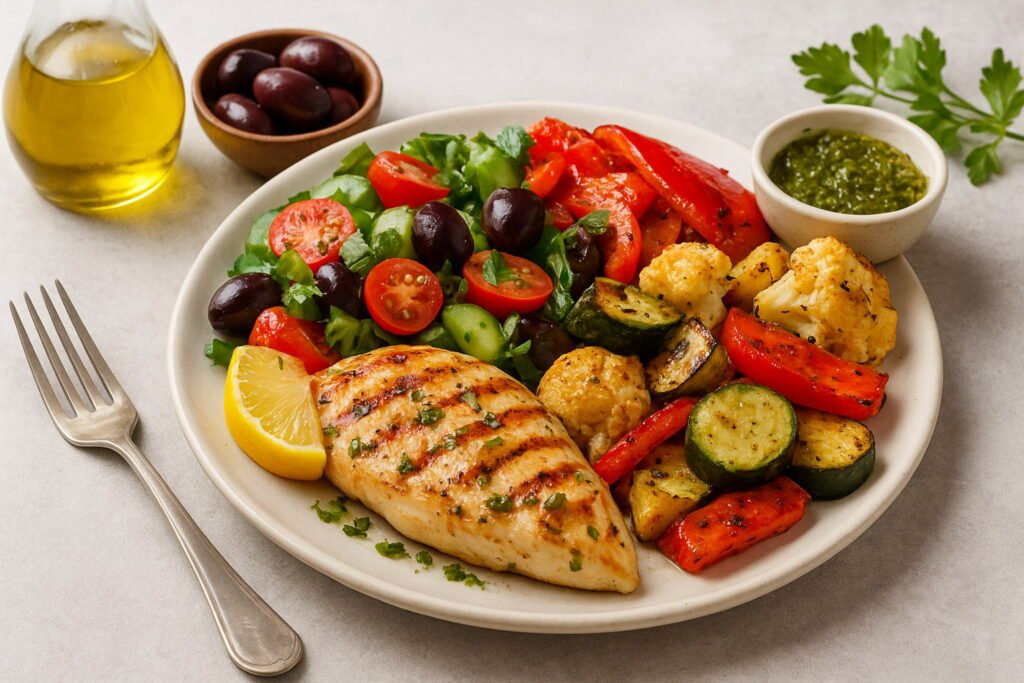
- Grilled Lemon Herb Chicken
- Roasted cauliflower and peppers
- Fresh tomatoes and cucumbers
- A drizzle of herb vinaigrette
- A sprinkle of toasted nuts for crunch
Table: Quick Pairing Guide
| Main Dish | Perfect Pairing |
| Lemon Herb Chicken | Cauliflower tabbouleh |
| Olive Tomato Salmon | Roasted zucchini & peppers |
| Garlic Shrimp | Arugula salad with olives |
| Zoodle Bowl | Grilled chicken or turkey |
These combinations help bring balance, color, and clean nourishment to the table—hallmarks of Mediterranean cooking.
Common Mistakes to Avoid
Even though Paleo Mediterranean diet recipes are simple by nature, a few common mistakes can dilute their flavor or compromise their Paleo integrity. These are easy to avoid with a bit of awareness.
Using Non-Paleo Ingredients by Accident
The Mediterranean diet traditionally includes grains, dairy, and legumes, so it’s important to avoid:
- Greek yogurt dressings
- Cheese (feta, halloumi, mozzarella)
- Couscous, bulgur, farro
- Beans and lentils
Always double-check labels for hidden ingredients like soy oil, refined sugar, or additives.
Overcooking Seafood
Salmon and shrimp become dry quickly.
Keep these guidelines in mind:
- Shrimp is ready in 2–3 minutes per side
- Salmon flakes easily when done
- Residual heat continues to cook seafood after removal from heat
Using Too Little Healthy Fat
Olive oil is central to Mediterranean cuisine and supports nutrient absorption. Don’t be afraid to drizzle:
- Over vegetables
- On cooked proteins
- Into salads and bowls
Neglecting Fresh Herbs
Mediterranean dishes rely heavily on herbs. Skipping them reduces depth and aroma.
Stock staples like:
- Basil
- Oregano
- Parsley
- Rosemary
- Mint
Not Balancing Flavors
Paleo dishes can taste flat if they lack acidity or brightness. Add lemon juice, zest, or fresh herbs at the end to lift the dish.
Quote from a Nutrition Chef
“Mediterranean food is simple, but it’s never bland. Herbs, lemon, and olive oil do the heavy lifting—use them generously.”
Conclusion
The world of Paleo Mediterranean diet recipes offers a flavorful path to nourishing, sustainable eating. By merging the whole-food focus of Paleo with the vibrant, herb-driven character of Mediterranean cooking, this approach creates meals that are both deeply satisfying and health-supportive.
Whether you’re grilling lemon chicken, preparing a zesty zoodle bowl, or experimenting with dairy-free Mediterranean sauces, this hybrid style opens doors to endless creativity. It’s accessible for beginners, enjoyable for seasoned home cooks, and adaptable for various lifestyles—from meal prep enthusiasts to families seeking nutrient-dense meals.
What makes this combined approach so compelling is its balance. Every ingredient serves a purpose—fueling the body, protecting long-term health, and delivering unmistakable Mediterranean warmth. As you continue exploring these meals, you’ll discover that simplicity, freshness, and bold natural flavors are not just culinary principles—they’re habits that make everyday eating more joyful.
For additional insights into how Mediterranean ingredients support long-term wellness, you can explore the research-rich resources provided by the Harvard School of Public Health (naturally included here): https://www.hsph.harvard.edu/nutritionsource/healthy-eating-plate/