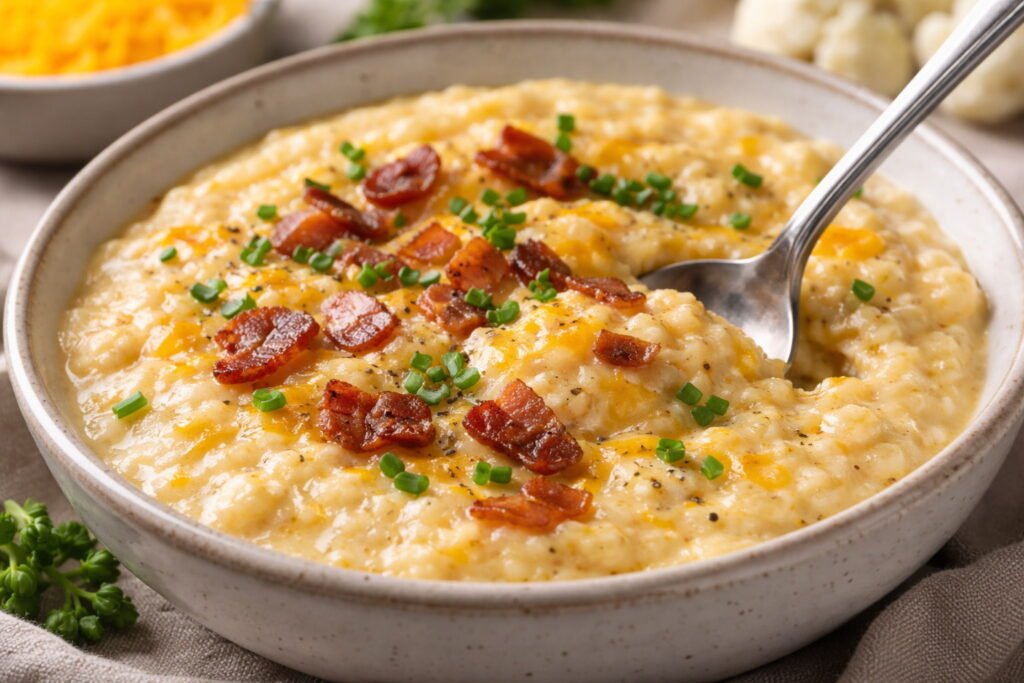
Cheesy cauliflower grits have quickly earned a place in modern kitchens, especially among home cooks looking for comfort food without the heavy carb load of traditional corn grits. This dish transforms humble cauliflower into a creamy, satisfying base that mimics the texture of classic Southern grits, then elevates it with rich, melted cheese for depth and indulgence.
What makes cheesy cauliflower grits stand out is their balance of comfort and nutrition. A single cup of cooked cauliflower contains roughly 25 calories and 5 grams of carbohydrates, compared to about 180 calories and 38 grams of carbohydrates in the same portion of corn grits. That dramatic difference explains why this recipe has become popular among low-carb, keto-inspired, and gluten-free eaters.
Beyond numbers, flavor is the real hook. When properly prepared, cauliflower absorbs butter, cream, and cheese beautifully, creating a dish that feels hearty rather than “diet.” Many chefs now treat cheesy cauliflower grits not as a substitute, but as a standalone comfort classic with its own identity.
“Cauliflower is one of the most adaptable vegetables in the kitchen—it takes on flavor without losing structure.”
— Culinary Institute of America, vegetable cookery notes
In This Article
What Are Cauliflower Grits?
Cauliflower grits are made by finely chopping or processing cauliflower florets and cooking them until soft and creamy. The goal is to recreate the smooth, spoonable consistency of traditional grits while keeping the dish lighter and more nutrient-dense.
Cauliflower Grits vs Traditional Grits
Texture and flavor differ, yet both serve the same purpose on the plate. The table below highlights key differences:
| Feature | Traditional Corn Grits | Cauliflower Grits |
| Main ingredient | Ground corn | Fresh cauliflower |
| Carbohydrates (per cup) | ~38 g | ~5 g |
| Calories (per cup) | ~180 kcal | ~25 kcal |
| Gluten-free | Yes | Yes |
| Glycemic impact | High | Low |
| Flavor base | Naturally sweet, grainy | Mild, neutral |
Unlike corn grits, cauliflower grits rely heavily on seasoning and fat to develop flavor. Butter, cheese, cream, garlic, and salt are not optional extras—they are essential building blocks.
Texture Matters
Achieving the right texture is critical. Finely processed cauliflower creates a smooth result, while coarser chops lead to a rice-like feel. Proper moisture control separates watery cauliflower mash from true grits-style creaminess.
Why Cheesy Cauliflower Grits Are a Game-Changer
Adding cheese turns cauliflower grits from a simple vegetable side into a luxurious comfort dish. Cheese contributes fat, umami, and structure, helping the cauliflower bind into a cohesive, creamy spoonful.
Flavor and Satiety Benefits
Cheese does more than taste good. It also increases satiety, which helps explain why cheesy cauliflower grits feel filling despite their low calorie count.
Key advantages include:
- Creamy mouthfeel without flour or starch
- Rich umami flavor that balances cauliflower’s mildness
- Improved fullness, reducing overeating
Nutritional Edge with Real Comfort
A typical serving of cheesy cauliflower grits made with sharp cheddar and butter delivers:
- Around 7–10 grams of protein
- Healthy fats that support longer-lasting energy
- Significantly fewer carbohydrates than classic cheese grits
Many home cooks report better blood sugar stability when swapping corn grits for cauliflower versions, especially at breakfast or dinner.
Case insight: In low-carb meal plans, replacing grain-based sides with cauliflower-based dishes can reduce total daily carbohydrate intake by 30–40% without sacrificing satisfaction.
Cheesy cauliflower grits succeed because they don’t try to “pretend” too much. Instead, they embrace cauliflower’s strengths while borrowing the comforting soul of traditional grits.
Best Ingredients for Perfect Cheesy Cauliflower Grits
Great cheesy cauliflower grits begin with smart ingredient choices. Since cauliflower has a neutral flavor, every component matters. Quality ingredients create depth, balance, and the signature creamy texture people expect from grits.
Choosing the Right Cauliflower
Fresh cauliflower delivers the best texture and flavor. One medium head (about 600–700 grams) yields roughly 4 cups of cauliflower rice, enough for four servings.
Best options include:
- Fresh cauliflower florets – firm, white, and tightly packed
- Frozen cauliflower rice – convenient but must be thoroughly drained
- Organic cauliflower – often milder and less bitter
Frozen cauliflower works in a pinch, yet excess moisture must be removed to prevent watery grits.
Best Cheeses for Cheesy Cauliflower Grits
Cheese defines the final flavor profile. Melting ability and sharpness matter more than price.
| Cheese Type | Flavor Profile | Best Use |
| Sharp cheddar | Bold, tangy | Classic cheesy cauliflower grits |
| Gruyère | Nutty, smooth | Gourmet-style grits |
| Parmesan | Salty, umami-rich | Flavor booster |
| Cream cheese | Mild, creamy | Extra silkiness |
| Monterey Jack | Soft, buttery | Mild family-friendly version |
Blending two cheeses often produces the best results, such as cheddar for flavor paired with cream cheese for texture.
Supporting Ingredients That Make a Difference
Everyday pantry staples elevate cauliflower into true grits territory:
- Butter for richness and mouthfeel
- Heavy cream or whole milk for smooth consistency
- Garlic or garlic powder for subtle depth
- Salt and white pepper for clean seasoning
Tip: Nutmeg or smoked paprika can add complexity without overpowering the dish.
Step-by-Step Cooking Method for Cheesy Cauliflower Grits
Technique matters just as much as ingredients. Proper preparation ensures creamy, cohesive cauliflower grits rather than loose mash.
Preparing the Cauliflower
Begin by breaking cauliflower into florets and processing them until fine, similar to cornmeal. A food processor works best, though a box grater also performs well.
Key preparation steps:
- Remove thick stems to avoid fibrous texture
- Pulse in short bursts to prevent purée
- Aim for rice-sized or finer pieces
Cooking for Creaminess
Cooking drives off moisture and softens the cauliflower structure.
Stovetop method (most reliable):
- Melt butter over medium heat
- Add cauliflower rice and cook for 6–8 minutes, stirring frequently
- Lower heat and stir in cream or milk
- Simmer until thick and spoonable
Cheese should be added last, off heat, to avoid separation or graininess.
Achieving Grits-Like Texture
Texture separates good cauliflower grits from great ones. Slight mashing with a spoon or immersion blender creates that familiar grits consistency without turning the mixture into soup.
Signs of perfect texture:
- Spoon holds shape briefly before settling
- No visible water pooling
- Smooth but not gluey mouthfeel
Common Mistakes to Avoid When Making Cheesy Cauliflower Grits
Even simple recipes have pitfalls. Avoiding these common errors protects flavor and texture.
Too Much Moisture
Cauliflower releases water as it cooks. Skipping evaporation leads to bland, runny grits.
Fix: Cook uncovered and allow steam to escape before adding dairy.
Adding Cheese Too Early
Cheese added over high heat can become oily or grainy.
Fix: Remove pan from heat, then stir cheese gently until melted.
Under-Seasoning
Cauliflower needs assertive seasoning to shine.
Fix: Season gradually and taste often. Salt unlocks both cheese and cauliflower flavor.
Chef’s note: “Seasoning vegetables properly matters more than seasoning meat—vegetables don’t hide mistakes.”
Mastering these fundamentals ensures consistently creamy, flavorful cheesy cauliflower grits that feel indulgent rather than compromised.
Flavor Variations and Add-Ins
Cheesy cauliflower grits shine because they adapt easily to different flavor profiles. A neutral base allows herbs, spices, and mix-ins to transform the dish without altering its creamy structure.
Herb-Forward Cheesy Cauliflower Grits
Fresh herbs add brightness and aroma, balancing the richness of cheese.
Popular herb additions include:
- Chives for a mild onion note
- Thyme for earthy depth
- Parsley for freshness
- Rosemary (finely minced) for a bold, savory twist
Fresh herbs work best when stirred in just before serving to preserve color and flavor.
Spicy and Smoky Variations
Heat and smoke bring complexity to cheesy cauliflower grits, making them ideal as a dinner side.
Flavor boosters that work well:
- Smoked paprika for subtle smokiness
- Cayenne pepper for controlled heat
- Chipotle powder for depth and warmth
- Crushed red pepper flakes for texture and spice
A small amount goes a long way, especially when paired with sharp cheeses.
Protein and Vegetable Add-Ins
Cheesy cauliflower grits can function as a complete meal with thoughtful additions.
Well-paired mix-ins:
- Crispy bacon or turkey bacon
- Sautéed mushrooms or spinach
- Shrimp, grilled chicken, or pulled pork
- Roasted garlic or caramelized onions
Kitchen insight: Adding protein directly to the grits helps the dish retain heat and enhances its comfort-food appeal.
Health and Nutrition Benefits
Beyond flavor, cheesy cauliflower grits deliver impressive nutritional advantages. Cauliflower provides fiber, antioxidants, and vitamins without excess calories.
Nutritional Comparison at a Glance
| Nutrient (per cup) | Cheesy Cauliflower Grits | Traditional Cheese Grits |
| Calories | ~140–160 kcal | ~320–350 kcal |
| Net carbohydrates | ~6–8 g | ~40–45 g |
| Fiber | ~3 g | ~1 g |
| Protein | ~8 g | ~7 g |
| Gluten | None | None |
Cheese contributes protein and calcium, while cauliflower adds vitamin C, vitamin K, and phytonutrients linked to reduced inflammation.
Diet Compatibility
Cheesy cauliflower grits fit seamlessly into several eating styles:
- Low-carb and keto-friendly (with full-fat dairy)
- Gluten-free by nature
- Vegetarian-friendly
- Paleo-adaptable when using compliant cheese alternatives
Clinical nutrition insight: Replacing refined grains with cruciferous vegetables like cauliflower may help support metabolic health and improve satiety signals.
How to Serve and Pair Cheesy Cauliflower Grits
Cheesy cauliflower grits work across meals, from breakfast plates to elegant dinners. Presentation and pairing elevate the experience.
Best Main Dishes to Pair With
This dish complements both light and bold proteins.
Top pairings include:
- Grilled or blackened shrimp
- Roasted chicken thighs
- Pan-seared salmon
- Slow-cooked short ribs
Rich proteins balance the creamy texture without overwhelming it.
Breakfast, Lunch, and Dinner Ideas
Versatility makes cheesy cauliflower grits a repeat favorite.
Serving ideas by meal:
- Breakfast: topped with a soft egg and herbs
- Lunch: served with roasted vegetables or grilled chicken
- Dinner: paired with seafood or braised meats
Meal Prep and Storage Tips
Cheesy cauliflower grits store well when handled properly.
Storage best practices:
- Refrigerate in airtight containers for up to 3 days
- Reheat gently with added milk or cream
- Stir well to restore creamy consistency
Home cook case note: Many meal preppers report better texture retention when reheating on the stovetop rather than in the microwave.
Final Thoughts on Cheesy Cauliflower Grits
Cheesy cauliflower grits prove that comfort food can be both deeply satisfying and nutritionally smart. By transforming cauliflower into a creamy, cheese-infused dish, this recipe delivers the emotional warmth of traditional grits while aligning with modern eating preferences focused on balance, whole foods, and reduced refined carbohydrates.
What truly sets cheesy cauliflower grits apart is versatility. Served simply with butter and sharp cheddar, they feel cozy and familiar. Dressed up with herbs, seafood, or roasted vegetables, they become elegant enough for entertaining. That adaptability explains why cauliflower-based grits have moved from niche diet circles into mainstream home cooking.
From a health perspective, the numbers speak clearly. Swapping corn grits for cauliflower can reduce carbohydrate intake by more than 80% per serving, while still providing fiber, antioxidants, and minerals. According to nutritional research highlighted by Harvard T.H. Chan School of Public Health, cruciferous vegetables like cauliflower are associated with improved metabolic markers and long-term health benefits when consumed regularly as part of a balanced diet. You can explore more about cauliflower’s nutritional profile on the Harvard School of Public Health website.
“Healthy eating works best when it doesn’t feel like deprivation.”
Cheesy cauliflower grits succeed because they honor that principle. Creamy, savory, and endlessly customizable, this dish isn’t just a substitute—it’s a modern comfort classic worth repeating in any kitchen.