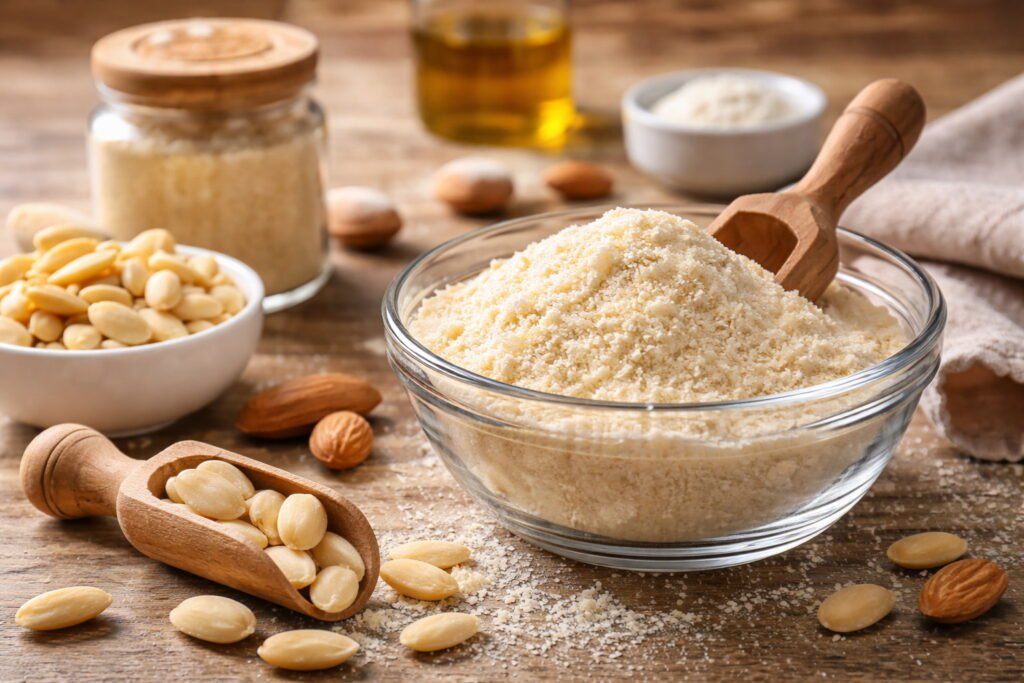
Blanched almond flour has become one of the most valued alternative flours in modern kitchens. Home cooks, professional bakers, and health-focused food creators love it because it delivers a soft, fine texture while staying naturally gluten-free and grain-free. The term “blanched” simply refers to almonds that had their brown skins removed before grinding, resulting in a pale flour with a smooth consistency and a delicate, mildly sweet flavor.
People appreciate blanched almond flour because it mimics traditional flour better than most nut flours. Cakes feel softer, cookies bake evenly, pancakes don’t crumble, and pastries hold structure instead of breaking apart. Texture makes a powerful difference, and that is exactly where blanched almond flour shines.
Key Facts About Blanched Almond Flour
- Made from skinless sweet almonds
- Naturally gluten-free and wheat-free
- Contains healthy fats and plant protein
- Delivers a fine, powdery consistency
- Performs beautifully in baking compared to coarse nut meals
Why Bakers Prefer It
- Better binding performance
- Lighter crumb in baked goods
- Neutral flavor that blends with sweet or savory recipes
- Consistent results when handled correctly
A quote many professional bakers agree with:
“Great baking depends on consistency. Blanched almond flour gives predictable, smooth texture that coarse nut flours simply cannot match.”
A quick look at how this ingredient is viewed in the culinary world shows that blanched almond flour is not a fad ingredient; it is a powerful, reliable staple.
In This Article
How Blanched Almond Flour Is Made
Blanched almond flour begins with premium almonds. Each step influences final taste, aroma, and texture, so careful handling matters.
Blanching Process
Boiling water loosens almond skins. The nuts are briefly heated, cooled immediately, and the skins slip off cleanly. Removing the skins prevents bitterness and gritty texture.
Drying and Preparation
Moisture control is essential. Almonds must be dried thoroughly so the flour does not clump, spoil, or turn into almond paste during grinding.
Grinding to Fine Powder
Powerful grinders reduce the almonds into a fine, pale flour. High-quality brands use superfine milling to avoid grit and ensure smooth baking performance.
Step-by-Step Overview
- Hot water loosens almond skins
- Skins are removed
- Almonds are dried entirely
- Nuts are ground finely
- Flour is sifted to create uniform powder
Texture and Appearance
- Pale ivory color
- Powder-soft feel
- No skins, flecks, or graininess
This careful process is the reason blanched almond flour behaves reliably in cakes, breads, pastries, and cookies.
Blanched Almond Flour vs Almond Meal
Confusion often happens between blanched almond flour and almond meal, yet they are not interchangeable in many recipes. The difference lies in skin, texture, and baking performance.
Visual and Functional Differences
| Feature | Blanched Almond Flour | Almond Meal |
| Source | Skinless almonds | Whole almonds with skins |
| Color | Pale cream | Speckled brown |
| Texture | Superfine, powder-like | Coarse, grainy |
| Taste | Mild, cleaner flavor | Slightly nutty, earthy |
| Best Use | Cakes, cookies, pastries, pancakes | Crusts, toppings, rustic bakes |
How Each Impacts Baking
Blanched almond flour creates delicate crumbs, smooth batters, and soft structures. Almond meal creates heavier textures and denser results. Recipes demanding precision—like macarons, sponge cakes, and fine pastries—perform best with blanched almond flour.
Case Study: Baking Outcome
A bakery tested both ingredients in the same cookie recipe.
- Cookies made with blanched almond flour spread evenly, baked golden, and held shape.
- Cookies made with almond meal baked unevenly, turned grainy, and crumbled more easily.
This simple comparison highlights why choosing the correct ingredient matters.
Short Quote from a pastry chef:
“Switching to blanched almond flour made our gluten-free desserts taste like bakery classics instead of substitutes.”
Selecting the right option changes the entire baking experience. Blanched almond flour remains the preferred choice when smoothness, quality, and consistent results are the priority.
Nutritional Profile of Blanched Almond Flour
Blanched almond flour doesn’t just improve baking quality—it also delivers meaningful nutrition. Since it is made purely from almonds, it carries the same natural nutrients, offering a balance of healthy fats, plant-based protein, fiber, vitamins, and minerals.
Key Nutritional Highlights
- Rich in heart-supporting monounsaturated fats
- Provides sustained energy due to low glycemic impact
- Contains antioxidants and micronutrients
- Naturally gluten-free, grain-free, and wheat-free
Approximate Nutrition per ¼ Cup (28g) of Blanched Almond Flour
| Nutrient | Amount |
| Calories | 160–170 kcal |
| Protein | 6 grams |
| Fat | 14 grams |
| Carbohydrates | 6 grams |
| Fiber | 3 grams |
| Net Carbs | About 3 grams |
| Vitamin E | High |
| Magnesium | Moderate |
| Calcium | Present |
Healthy fats in blanched almond flour support satiety and steady blood sugar. Protein helps structure and stability in recipes while also fueling the body. The lower carbohydrate load makes it attractive for people monitoring carb intake.
How Blanching Affects Nutrients
Blanching removes the almond skin but retains the core nutrition. Slight reductions occur in fiber and antioxidant compounds located in the skin; however, the flour remains nutrient-dense, flavorful, and versatile.
Why Many People Choose It
- Suitable for gluten-free baking lifestyles
- Great fit for low-carb and grain-free approaches
- Provides richer nutrition than many refined flours
A nutritionist once stated:
“Blanched almond flour offers density, nutrition, and taste in a way many alternative flours struggle to match.”
Balanced nutrition paired with baking reliability makes blanched almond flour an outstanding pantry ingredient.
Baking With Blanched Almond Flour
Baking success with blanched almond flour depends on understanding its behavior. It doesn’t act like wheat flour because it lacks gluten, yet when handled correctly, it produces tender, moist, bakery-quality results.
How Blanched Almond Flour Behaves in Baking
- Naturally retains moisture
- Creates soft, delicate crumb structures
- Adds subtle sweetness without overpowering flavors
- Binds well when paired with eggs or binders
Expect These Texture Results
- Softer interiors
- Crispy cookie edges
- Moist cakes and muffins
- Stable pastries with pleasant bite
Helpful Baking Tips
- Use recipes designed for blanched almond flour
- Measure using weight for accuracy
- Combine with binder ingredients like eggs, tapioca flour, or xanthan gum when needed
- Avoid over-mixing to prevent density
Ideal Recipes Using Blanched Almond Flour
- Cookies and biscuits
- Pancakes and waffles
- Muffins and quick breads
- Cakes, cupcakes, and macarons
- Savory coatings and crusts
Quick Reference Baking Behavior Table
| Feature | Result with Blanched Almond Flour |
| Rise | Moderate |
| Texture | Soft, tender, moist |
| Binding | Needs support ingredients |
| Browning | Excellent due to natural oils |
| Flavor | Mild, slightly sweet |
Well-planned baking always rewards the effort. Blanched almond flour delivers that reward beautifully when used with care.
Blanched Almond Flour in Gluten-Free and Grain-Free Diets
Gluten-free and grain-free baking has evolved dramatically, and blanched almond flour sits at the center of that transformation. People appreciate its ability to replicate familiar baked textures while eliminating wheat and grains.
Why It Works So Well
- No gluten
- Natural fat content prevents dryness
- Fine texture supports smooth doughs and batters
- Provides structure with the right recipe balance
Who Commonly Uses Blanched Almond Flour
- Individuals avoiding gluten
- Bakers creating paleo-style treats
- Low-carb and keto recipe developers
- Health-conscious home cooks
Benefits in These Diet Approaches
- Supports satisfying textures without wheat
- Offers better taste compared to many alternative flours
- Delivers nutrition rather than empty calories
- Helps maintain enjoyment of baked foods while adjusting lifestyle choices
Case Insight
Many gluten-free bakeries transitioned from heavy rice flours to blanched almond flour because customers noticed improved moisture, flavor, and satisfaction. That shift demonstrates how powerful this ingredient can be.
A culinary specialist shared:
“Switching to blanched almond flour allowed us to create gluten-free desserts that customers genuinely prefer, not just tolerate.”
People seeking a delicious way to enjoy gluten-free or grain-free baking consistently find blanched almond flour to be one of the most dependable solutions.
Storage and Shelf Life of Blanched Almond Flour
Blanched almond flour remains at its best when treated like a delicate ingredient. Natural oils inside almonds can spoil if exposed to heat, light, or moisture, so smart storage keeps the flour fresh, fragrant, and ready to bake.
Ideal Storage Practices
- Use airtight containers with secure seals
- Keep flour away from heat-producing appliances
- Store in cool, low-humidity environments
- Avoid frequent temperature shifts
Where Blanched Almond Flour Lasts Longest
| Storage Location | Estimated Shelf Life | Key Notes |
| Pantry | 2–3 months | Best for unopened bags |
| Refrigerator | 6–8 months | Slows oxidation and rancidity |
| Freezer | 10–12 months | Longest preservation option |
Clear Signs It Has Spoiled
- Sharp sour smell
- Bitter aftertaste
- Unpleasant oily residue
- Clumps that do not break apart easily
Helpful Preservation Habits
- Label storage date
- Keep in original bag inside another container
- Seal immediately after scooping
- Store smaller portions separately to avoid repeated air exposure
Professional bakers have a simple reminder:
“Treat blanched almond flour like fresh food, not a permanent pantry item, and it will reward you with beautiful results.”
Purchasing Tips for Blanched Almond Flour
Quality varies widely among brands, so thoughtful purchasing ensures smoother batters, predictable results, and better taste.
What to Look for on Labels
- Clear wording: “Blanched Almond Flour”
- Description such as finely ground or superfine
- Single ingredient listing
- Fresh production date when possible
Fine vs Superfine Blanched Almond Flour
| Type | Best Use | Texture Outcome |
| Fine Grind | Everyday baking | Slightly denser crumb |
| Superfine | Macarons, cakes, patisserie | Silky, precise texture |
Cost and Value Considerations
- Bulk purchases lower price per gram
- Premium superfine products cost more due to advanced milling
- Online retailers often provide the best balance of price and quality
Where People Commonly Buy Blanched Almond Flour
- Health-focused grocery aisles
- Specialty baking stores
- Online marketplaces
- Wholesale ingredient suppliers
Quote from a pastry instructor:
“The grind determines success. Superfine blanched almond flour often behaves closest to traditional wheat flour.”
Homemade Blanched Almond Flour: Step-by-Step
Homemade blanched almond flour offers freshness, control, and potential savings. Many home bakers choose to make their own when store shelves feel limited or prices run high.
Benefits of Making It Yourself
- Enhanced freshness and aroma
- Control over grind level
- Lower long-term cost
- A satisfying sense of craft and involvement
How to Make Blanched Almond Flour
Blanching
- Place raw almonds into boiling water briefly.
- Remove and cool.
- Slip skins off easily once loosened.
Drying
- Spread almonds evenly on a tray.
- Air dry thoroughly or use low oven heat.
- Ensure absolute dryness before grinding.
Grinding
- Pulse small batches using a strong processor.
- Avoid continuous blending to prevent almond butter.
- Sift and regrind larger pieces until fine.
Helpful Practical Tips
- Work with dry equipment only
- Chill almonds slightly before grinding to reduce oil release
- Store immediately after milling
Homemade vs Store-Bought Comparison
| Aspect | Homemade Blanched Almond Flour | Store-Bought |
| Cost | Often cheaper | Usually higher |
| Texture Control | Full control | Professionally consistent |
| Effort | Requires time | Ready instantly |
| Freshness | Very fresh | Dependent on packaging |
Case experience shared by home bakers often highlights fresher aroma, softer flavors, and meaningful savings with homemade flour, although achieving perfectly superfine texture requires patience.
Common Mistakes and Troubleshooting With Blanched Almond Flour
Even excellent ingredients fail without correct handling. Blanched almond flour behaves differently than wheat flour, so awareness of common mistakes prevents frustration.
Frequent Problems Bakers Experience
- Dense or heavy results
- Crumbly or overly fragile textures
- Oily or greasy outcomes
- Incorrect substitution ratios
Why These Issues Happen
- Over-mixing compresses batter
- Lack of binders reduces structure
- Excess heat activates oils
- Treating almond flour like wheat flour instead of its own ingredient
Quick Troubleshooting Guide
| Problem | Likely Cause | Simple Fix |
| Dense baking results | Over-mixing or too much flour | Weigh ingredients, mix gently |
| Crumbly texture | No binder or insufficient eggs | Add egg, flax egg, or xanthan gum |
| Greasy feel | Excess heat or too much fat | Reduce baking temperature slightly |
| Flat or unstable bakes | Wrong substitution approach | Use recipes made for almond flour |
Professional Advice Worth Remembering
- Measure by weight, not cups, whenever possible
- Combine with moisture-supporting ingredients
- Follow recipes designed specifically for almond flour
- Allow bakes to cool completely to firm properly
A pastry chef once summarized it perfectly:
“Blanched almond flour rewards understanding. Learn its personality, and it produces magic.”
Anyone wanting a deeper scientific understanding of almond flour, nutrition, and almond handling can explore research-backed information provided by trusted health and food authorities such as the resourceful guidance from the Harvard T.H. Chan School of Public Health at https://www.hsph.harvard.edu/nutritionsource/food-features/nuts-and-seeds/.