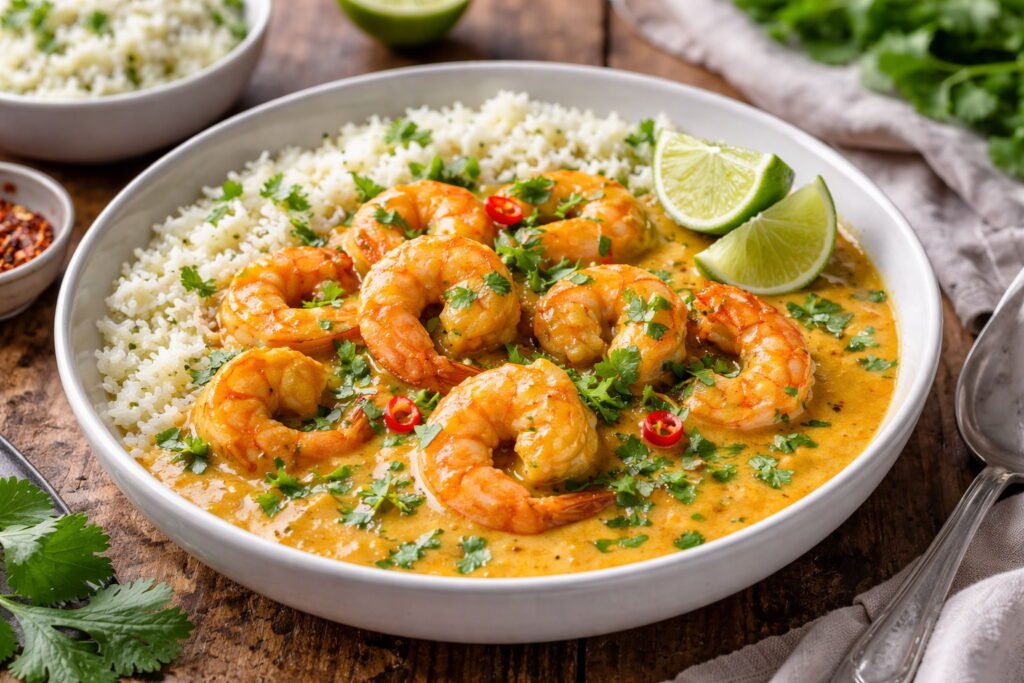
Coconut Curry Shrimp with Cauliflower Rice has become a favorite for people who love rich flavor without the heaviness of traditional rice dishes. This delicious combination brings together creamy coconut curry, tender shrimp, and light cauliflower rice to create a meal that feels both comforting and refreshingly balanced. Many home cooks choose it when they want something special yet practical, something that feels gourmet but stays simple enough to prepare any day of the week.
Health-focused eaters, flavor enthusiasts, and busy families all find value in Coconut Curry Shrimp with Cauliflower Rice because it offers nourishment, warmth, and beautiful aroma in every bite. It fits modern eating styles, supports mindful nutrition, and still delivers the kind of taste that makes you want to go back for another bowl.
In This Article
Coconut Curry Shrimp with Cauliflower Rice
Coconut curry shrimp with cauliflower rice delivers warmth, bold aroma, and satisfying nourishment in every bite. This dish brings together juicy shrimp, creamy coconut curry sauce, and fluffy cauliflower rice to create a comforting yet lighter alternative to heavier rice-based meals. Home cooks love it because preparation stays manageable while flavors feel restaurant-worthy. Health-focused readers appreciate the balance of protein, good fats, and low-carb cauliflower, which supports modern lifestyle goals without sacrificing taste.
What Makes Coconut Curry Shrimp with Cauliflower Rice Appealing
- Rich coconut sauce that feels indulgent yet wholesome
- Shrimp that cooks quickly while offering lean protein
- Cauliflower rice providing a grain-free alternative
- Aromatic spices delivering depth, warmth, and excitement
Quick Facts About Coconut Curry Shrimp with Cauliflower Rice
| Aspect | Detail |
| Difficulty Level | Beginner to Intermediate |
| Average Cook Time | 25–35 minutes |
| Diet Suitability | Paleo, Gluten-Free, Low-Carb, Keto Friendly |
| Flavor Profile | Creamy, mildly spicy, savory, aromatic |
| Best Occasions | Weeknight dinners, meal prep, special family meals |
“Good food doesn’t have to be complicated. It just needs balance, thoughtful ingredients, and a little love in the pan.”
Well-prepared coconut curry shrimp with cauliflower rice proves exactly that.
Why Coconut Curry Shrimp with Cauliflower Rice Is a Perfect Meal Choice
Coconut curry shrimp with cauliflower rice fits beautifully into today’s smart eating approach. Many people want food that comforts, energizes, and nourishes without feeling heavy. This meal checks every box.
Nutritional and Lifestyle Benefits
- Supports balanced nutrition: Shrimp supplies lean protein while coconut milk offers satisfying fats
- Low-carb friendly: Cauliflower rice reduces overall carb load compared to traditional rice
- Naturally gluten-free and grain-free: Suitable for a wide range of dietary needs
- Flexible for spice lovers or mild flavor fans: Seasoning can be easily adjusted
Practical Reasons Home Cooks Love It
- Quick cooking ingredients save time
- Minimal prep effort while still impressive
- Adaptable for family dinners, romantic meals, or meal prep
- Works well year-round due to its comforting yet light nature
Mini Case Study: Real Kitchen Success
A home cook tested coconut curry shrimp with cauliflower rice during a busy workweek. Preparation took under 30 minutes, leftovers stored perfectly for lunch, and the family enjoyed the flavor so much it became part of their regular rotating menu. Results showed:
- Reduced reliance on takeout
- Better portion control
- More satisfying meals without feeling overly full
This example reflects how coconut curry shrimp with cauliflower rice fits real life, not just recipe blogs.
Key Ingredients for Coconut Curry Shrimp with Cauliflower Rice
Successful coconut curry shrimp with cauliflower rice begins with quality ingredients. Thoughtful selection shapes flavor, texture, and nutritional value.
Essential Components
Shrimp
- Fresh or responsibly frozen shrimp deliver sweet, delicate seafood flavor
- Medium to large shrimp hold texture well when simmered in curry sauce
- Proper cleaning ensures clean taste and appealing appearance
Coconut Milk
- Full-fat coconut milk builds silkiness and body
- Light coconut milk works when a leaner option is preferred
- Creates signature creaminess that defines coconut curry shrimp with cauliflower rice
Curry Elements
- Curry paste or curry powder forms the flavor backbone
- Fresh garlic, onion, and ginger deepen complexity
- A squeeze of lime or lemon brightens richness without overpowering
Cauliflower Rice
- Freshly grated cauliflower offers the best texture
- Frozen cauliflower rice remains a convenient and effective option
- Neutral taste allows curry flavors to shine while replacing heavy grains
Helpful Ingredient Tips
- Wild-caught shrimp often tastes sweeter and firmer
- Unsweetened coconut milk prevents unwanted sweetness
- Fresh aromatics outperform dried alternatives in flavor intensity
- Good salt balance elevates everything in coconut curry shrimp with cauliflower rice
“Great dishes come from respecting ingredients. Treat each component well, and the result rewards you.”
Choosing and Preparing Shrimp for Coconut Curry Shrimp with Cauliflower Rice
Quality shrimp sets the tone for successful coconut curry shrimp with cauliflower rice. Proper selection and preparation ensure tenderness, fresh taste, and appealing texture. Shrimp absorbs curry flavors quickly, so freshness matters more than many people realize.
Selecting the Best Shrimp
- Fresh shrimp should smell clean and slightly briny, never fishy
- Firm flesh indicates good quality
- Frozen shrimp can be excellent when sourced properly
- Deveined and peeled shrimp save time for busy kitchens
Size Matters
| Shrimp Size | Benefit | Best Use in Coconut Curry Shrimp with Cauliflower Rice |
| Medium (41–50 count) | Quick cooking, budget friendly | Family meals, meal prep |
| Large (31–40 count) | Meaty bite, retains juiciness | Dinner parties, special meals |
| Extra Large (21–25 count) | Premium texture | Restaurant-style presentation |
Preparation Steps That Improve Flavor
- Rinse gently and pat dry before seasoning
- Remove shells and tails if serving family-style or meal prep
- Keep tails on for elegant plating if desired
- Avoid soaking shrimp in water to prevent mushy texture
Marinating and Seasoning Tips
- Light seasoning helps shrimp shine in curry sauce
- A touch of salt, pepper, and a squeeze of lime works beautifully
- Short marinating time prevents toughness
“Perfect seafood relies on respect. Handle shrimp gently, cook it thoughtfully, and it rewards you with sweetness and tenderness.”
Well-prepared shrimp becomes the heart of coconut curry shrimp with cauliflower rice, delivering flavor depth while still feeling light.
Building the Perfect Coconut Curry Sauce for Coconut Curry Shrimp with Cauliflower Rice
Coconut curry sauce creates the soul of coconut curry shrimp with cauliflower rice. A velvety sauce layered with aromatics, spice, and subtle sweetness transforms simple ingredients into an unforgettable dish. A well-structured sauce feels luxurious without heaviness.
Core Elements of a Great Coconut Curry Sauce
- Full-fat coconut milk for creamy richness
- Curry paste or curry powder for foundation spice
- Garlic, ginger, and onion for savory depth
- A splash of lime or lemon for brightness
- A pinch of salt to balance everything
Flavor Balance Guide
| Flavor Element | Purpose | Example Ingredient |
| Creaminess | Smooth body | Coconut milk |
| Heat | Warmth and excitement | Curry paste, chili |
| Savory | Depth | Garlic, onion, ginger |
| Brightness | Fresh lift | Lime juice |
| Subtle Sweet Note | Harmony | Coconut milk’s natural sweetness |
Expert Tips for Exceptional Coconut Curry Shrimp Sauce
- Sauté aromatics before adding coconut milk to unlock flavor
- Simmer gently to avoid curdling or separation
- Stir frequently for silky consistency
- Taste repeatedly to adjust seasoning confidently
Quote to Remember
“Spice should never shout; it should sing. Good curry feels layered, smooth, and full of personality.”
Well-executed sauce elevates coconut curry shrimp with cauliflower rice from simple seafood to an extraordinary comfort dish.
Making Fluffy and Flavorful Cauliflower Rice for Coconut Curry Shrimp with Cauliflower Rice
Cauliflower rice supports coconut curry shrimp beautifully while keeping the meal lighter than traditional rice. Proper technique turns cauliflower rice from basic vegetable into an impressive base.
Choosing Between Fresh or Frozen
- Fresh cauliflower rice provides the best fluffy texture
- Frozen cauliflower rice remains convenient and reliable
- Both can taste excellent when cooked thoughtfully
Preparation Approach That Works
- Pulse cauliflower in food processor until rice-like
- Avoid over-processing to prevent mushy texture
- Spread out while cooking to release moisture
- Season lightly to complement curry rather than compete with it
Cauliflower Rice Texture Guide
| Desired Result | Technique |
| Light and fluffy | Cook uncovered, medium heat |
| Slightly toasted flavor | Sauté with small amount of oil |
| Extra tender | Cover briefly then uncover to finish |
Helpful Enhancements
- A little garlic or onion adds gentle flavor
- Pinch of salt creates balance
- Squeeze of lime brightens the natural taste
“Great cauliflower rice does not try to mimic traditional rice completely. It stands proudly as its own delicious, lighter alternative.”
Perfect cauliflower rice helps coconut curry shrimp with cauliflower rice feel satisfying without heaviness, offering comfort, nutrition, and enjoyable texture in each spoonful.
Step-by-Step Cooking Guide for Coconut Curry Shrimp with Cauliflower Rice
Coconut curry shrimp with cauliflower rice becomes incredibly manageable when the cooking process is organized. A smooth workflow guarantees tender shrimp, silky curry sauce, and perfectly textured cauliflower rice without stress.
Cooking Order That Delivers Best Results
- Prepare ingredients before turning on the stove
- Cook cauliflower rice separately so texture remains controlled
- Build curry sauce slowly to develop depth
- Add shrimp near the end to prevent overcooking
Step-By-Step Process
1. Prepare Aromatics
Warm oil in a pan, then sauté garlic, ginger, and onion until fragrant and lightly golden.
2. Create Curry Base
Stir in curry paste or curry powder. Let spices bloom for richer taste.
3. Add Coconut Milk
Pour in coconut milk and gently simmer to thicken into a velvety sauce.
4. Season With Balance
Taste and adjust with salt, lime, or mild sweetness depending on preference.
5. Cook Shrimp Carefully
Slide shrimp into the simmering sauce and cook just until pink.
6. Layer Over Cauliflower Rice
Serve shrimp and sauce over freshly made cauliflower rice for the perfect pairing.
Common Mistakes to Avoid
- Overcooking shrimp results in rubbery texture
- High heat may cause coconut milk to split
- Heavy seasoning can overpower delicate shrimp flavor
“Cooking is timing and intuition working together. Trust the process, pay attention to the food, and delicious results follow.”
Variations of Coconut Curry Shrimp with Cauliflower Rice
Coconut curry shrimp with cauliflower rice adapts beautifully to taste preferences, dietary needs, and creativity. Personal twists allow home cooks to make the dish uniquely their own while keeping the core essence intact.
Flavor-Based Variations
- Mild coconut curry with less chili for family-friendly meals
- Spicy coconut curry for heat lovers using extra curry paste or fresh chili
- Herb-forward curry with cilantro or basil for brightness
Vegetable Add-Ins That Work Perfectly
| Vegetable | Benefit | Best Cooking Stage |
| Bell Pepper | Sweet crunch | With aromatics |
| Spinach | Soft texture, nutrients | Near the end |
| Broccoli | Bite and fiber | Mid simmer |
| Peas | Subtle sweetness | Final minutes |
Dietary Adaptations
- Keto style using full-fat coconut milk
- Whole30 approved version with clean curry paste choices
- Dairy-free naturally, making it accessible without modification
Coconut curry shrimp with cauliflower rice invites creativity without changing its soul.
Serving, Storage, and Reheating Tips for Coconut Curry Shrimp with Cauliflower Rice
Coconut curry shrimp with cauliflower rice deserves thoughtful serving to enhance flavor and presentation. Smart storage and reheating methods also preserve quality for meal prep or leftovers.
Best Serving Practices
- Serve hot to experience full aroma
- Garnish with lime wedges, herbs, or light chili flakes
- Pair with a crisp salad for freshness
- Present in shallow bowls to cradle sauce beautifully
Storage Guidelines
| Storage Method | Duration | Tip |
| Refrigerator | 2–3 days | Store shrimp separately if possible |
| Freezer | Up to 1 month | Best quality when sauce frozen without shrimp |
| Meal Prep Containers | Excellent | Keeps work lunches satisfying |
Reheating Tips
- Warm gently on stovetop to protect shrimp texture
- Avoid high microwave settings to prevent rubbery seafood
- Stir sauce occasionally to maintain smoothness
Thoughtful handling keeps coconut curry shrimp with cauliflower rice tasting fresh, comforting, and deeply enjoyable.
Final Thoughts on Enjoying Coconut Curry Shrimp with Cauliflower Rice
Coconut curry shrimp with cauliflower rice stands out as a dish that balances flavor pleasure with nutritional mindfulness. It feels indulgent while supporting health goals, making it an outstanding option for modern kitchens. Families appreciate its warmth, food enthusiasts love the layered taste, and health-conscious diners value its lighter composition.
Why This Dish Deserves a Spot in Your Kitchen
- Flexible, flavorful, and approachable
- Perfect bridge between comfort food and smart eating
- Suitable for busy schedules without sacrificing depth
- Elegant enough to impress yet simple enough for weekdays
Cooking coconut curry shrimp with cauliflower rice becomes more than preparing dinner. It turns into crafting a nourishing, aromatic experience that satisfies body and soul. Home cooks gain confidence, families enjoy delicious meals, and kitchens fill with inviting curry fragrance.
Further inspiration, ingredient guidance, and cooking science around coconut curry traditions can be explored through trusted culinary resources like BBC Good Food, which offers helpful insight into world curry flavors and techniques: https://www.bbcgoodfood.com