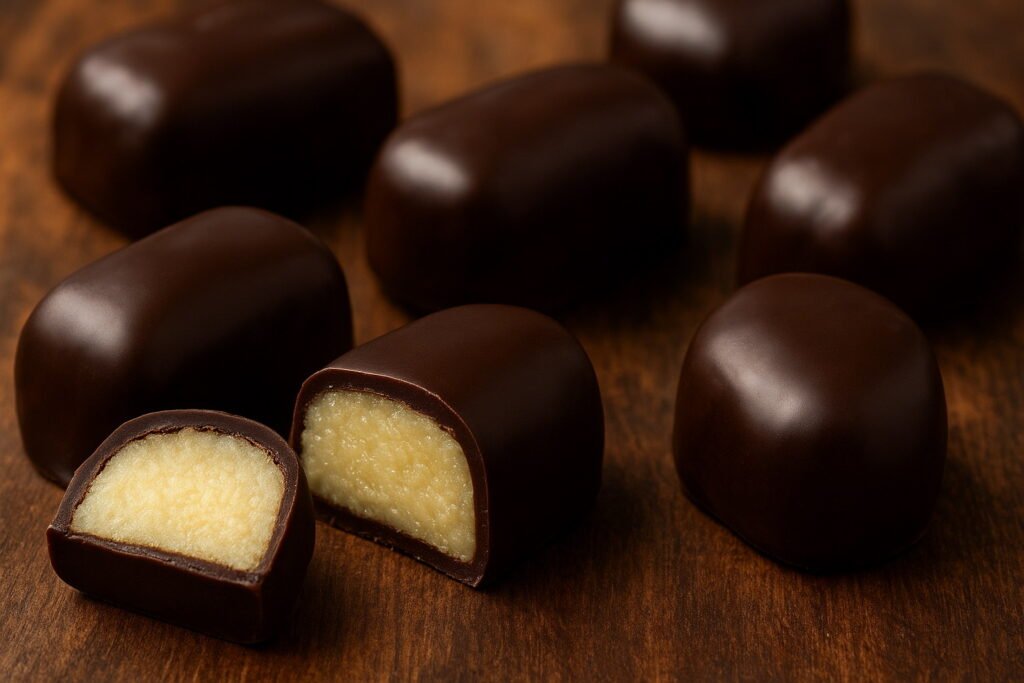
Dark chocolate covered marzipan stands at the crossroads of European confectionery tradition and modern indulgence. This delicacy combines the deep, slightly bitter richness of dark chocolate with the sweet, nutty smoothness of almond-based marzipan. The result feels luxurious without being overwhelming, simple yet layered with flavor. This article explores dark chocolate covered marzipan through its meaning, origins, and sensory appeal, staying closely rooted in craftsmanship, taste, and culinary relevance.
In This Article
Dark Chocolate Covered Marzipan
Dark chocolate covered marzipan is a confection made by enclosing a soft almond paste center within a thin shell of dark chocolate. Each element serves a precise role. Marzipan delivers sweetness, density, and an unmistakable almond aroma, while dark chocolate adds structure, depth, and a clean snap.
Popularity has endured for centuries because this pairing satisfies multiple sensory expectations at once:
- Taste: nutty sweetness balanced by cocoa bitterness
- Texture: creamy interior contrasted with a firm chocolate shell
- Aroma: roasted almonds blended with cacao notes
Dark chocolate covered marzipan appears frequently during festive seasons, yet its appeal reaches far beyond holidays. Artisan chocolatiers, home confectioners, and specialty brands continue to refine techniques and ingredient quality, proving that simplicity often produces the most memorable results.
“When almond meets cocoa, restraint becomes luxury.”
— Traditional European confectionery saying
The Origins of Marzipan and Its Pairing With Dark Chocolate
Marzipan traces its roots to the Middle East and Mediterranean regions, where almonds and honey were abundant. Written records place marzipan-like sweets as early as the 9th century, spreading into Europe through trade routes. By the Renaissance period, marzipan had become a prized confection in Spain, Italy, and Germany.
Dark chocolate entered the equation much later. Cocoa reached Europe in the 16th century, initially consumed as a beverage. Solid chocolate production evolved during the 18th and 19th centuries, making coatings possible. Once refined sugar processing and chocolate tempering improved, artisans discovered that dark chocolate complemented marzipan better than milk chocolate due to its lower sweetness.
Key historical factors behind the pairing include:
- Almond richness balancing cocoa bitterness
- Improved chocolate tempering techniques
- Increased access to high-quality cocoa beans
Germany’s Lübeck region and Spain’s Toledo became especially known for premium dark chocolate covered marzipan, exporting confections across Europe and shaping modern expectations of quality.
What Makes Dark Chocolate Covered Marzipan So Irresistible
Dark chocolate covered marzipan captivates because it delivers contrast without conflict. Each bite unfolds in stages rather than hitting all at once.
Flavor Balance
Dark chocolate with 60–75% cocoa content provides bitterness, subtle fruit acidity, and roasted notes. Marzipan contributes sweetness and fat, softening sharp cocoa edges.
Flavor comparison table
| Component | Primary Flavor | Supporting Notes |
| Dark chocolate | Bitter cocoa | Coffee, fruit, earth |
| Marzipan | Sweet almond | Vanilla, floral hints |
| Combined | Balanced | Long, smooth finish |
Texture Experience
The chocolate shell creates a crisp initial bite. Beneath it, marzipan yields slowly, offering a dense yet smooth chew. This textural progression explains why dark chocolate covered marzipan feels more satisfying than softer truffles or overly sweet pralines.
Psychological Appeal
Several factors enhance desirability:
- Perception of dark chocolate as sophisticated
- Almonds associated with luxury and nourishment
- Minimal ingredient list signaling craftsmanship
Consumers often describe dark chocolate covered marzipan as comforting yet refined, making it equally suited for gifting or quiet personal enjoyment.
Key Ingredients in Dark Chocolate Covered Marzipan
Dark chocolate covered marzipan relies on a short, deliberate ingredient list. Quality matters more than quantity, and each component affects flavor, texture, and shelf stability.
Core Ingredients Explained
Marzipan ingredients
- Finely ground almonds or almond flour (minimum 50–66% in premium versions)
- Sweetener such as powdered sugar or honey
- Binding agent, usually water or rosewater
- Natural flavoring like vanilla or bitter almond extract
Dark chocolate ingredients
- Cocoa solids
- Cocoa butter
- Minimal sugar
- Optional lecithin (emulsifier)
Ingredient Quality Comparison
| Ingredient | Standard Quality | Premium Quality |
| Almonds | Blanched, mixed origin | Single-origin Mediterranean almonds |
| Sweetener | Refined sugar | Organic cane sugar or honey |
| Chocolate | 50–55% cocoa | 65–75% cocoa, high cocoa butter |
| Flavoring | Artificial essence | Natural extracts |
High almond content defines authentic marzipan. European confectionery regulations often require at least 50% almonds, while luxury producers exceed 60%, delivering richer mouthfeel and reduced sweetness.
How Dark Chocolate Covered Marzipan Is Made
Crafting dark chocolate covered marzipan blends precision and patience. Each step influences texture, appearance, and flavor release.
Marzipan Preparation
Almonds are finely ground until a smooth paste forms. Sweeteners and liquid binders are incorporated gradually to prevent graininess. Resting time follows, allowing flavors to mature and moisture to distribute evenly.
Shaping the Centers
Marzipan is shaped into:
- Logs
- Balls
- Rectangles
- Traditional fruit or loaf forms
Uniform sizing ensures even chocolate coating and consistent mouthfeel.
Chocolate Coating Process
Dark chocolate undergoes tempering to stabilize cocoa butter crystals. Proper tempering produces:
- Clean snap
- Glossy finish
- Resistance to bloom
Marzipan centers are dipped or enrobed, then cooled at controlled temperatures between 16–18°C (60–64°F).
“Perfect tempering separates fine confectionery from candy.”
— Artisan chocolatier principle
Dark Chocolate Selection for the Perfect Coating
Choosing the right chocolate determines whether dark chocolate covered marzipan tastes harmonious or harsh.
Ideal Cocoa Percentage
Most experts recommend 60–72% cocoa. Lower percentages risk excessive sweetness, while higher levels overpower almond nuance.
Flavor Compatibility
Cocoa origin influences the final profile:
| Cocoa Origin | Flavor Notes | Pairing Result |
| Ghana | Deep cocoa, mild acidity | Balanced and classic |
| Ecuador | Floral, fruity | Elegant and aromatic |
| Madagascar | Bright, tangy | High contrast, bold |
| Peru | Earthy, nutty | Seamless almond match |
Chocolate with higher cocoa butter content coats more smoothly and melts cleanly on the palate.
Texture and Flavor Profile of Dark Chocolate Covered Marzipan
Dark chocolate covered marzipan offers a layered sensory experience rather than a single-note sweetness.
Bite Progression
- Initial snap from tempered dark chocolate
- Gradual yield into dense marzipan
- Lingering almond and cocoa finish
Sensory Characteristics
Flavor
- Mild bitterness balanced by almond sweetness
- Subtle floral or fruity cocoa notes
Texture
- Firm exterior
- Creamy, slightly chewy center
Aroma
- Roasted nuts
- Cocoa and vanilla undertones
This structured experience explains why dark chocolate covered marzipan satisfies with smaller portions compared to softer confections.
Variations of Dark Chocolate Covered Marzipan
Creative adaptations expand the classic without losing its identity.
Flavor Variations
- Orange zest marzipan with dark chocolate
- Rosewater-infused marzipan
- Pistachio-blended marzipan centers
Chocolate Enhancements
- Spiced dark chocolate with cinnamon or chili
- Sea salt–sprinkled coatings
- Single-origin chocolate finishes
Regional Styles
- German style: Firm marzipan, thick chocolate shell
- Spanish style: Softer marzipan, lighter coating
- Artisan modern: Minimal sugar, high cocoa emphasis
Each variation preserves the core principle: almond sweetness balanced by dark cocoa depth.
Health Aspects of Dark Chocolate Covered Marzipan
Dark chocolate covered marzipan offers nutritional value when enjoyed mindfully.
Nutritional Benefits
Almond-based marzipan provides:
- Vitamin E
- Magnesium
- Healthy monounsaturated fats
Dark chocolate contributes:
- Flavonoids linked to heart health
- Antioxidants
- Trace minerals like iron and zinc
Nutritional Snapshot (Per 30g piece)
| Nutrient | Approximate Amount |
| Calories | 140–160 kcal |
| Fat | 8–10 g |
| Carbohydrates | 12–15 g |
| Protein | 3–4 g |
Moderation remains essential. Sugar content still exists, though premium dark chocolate covered marzipan typically contains less sugar than milk chocolate confections.
Mindful enjoyment transforms indulgence into balance.
Texture and Flavor Profile of Dark Chocolate Covered Marzipan
Dark chocolate covered marzipan delivers a layered sensory journey that unfolds gradually with each bite. This complexity separates it from mass-produced chocolate candies and explains its lasting appeal among confectionery enthusiasts.
How Texture Shapes the Experience
Texture plays a defining role in how flavors are perceived. A properly made piece offers:
- A clean snap from well-tempered dark chocolate
- A dense yet smooth marzipan interior
- A slow, satisfying melt that releases almond oils and cocoa aromas
Poorly balanced versions feel either chalky or overly soft, while high-quality dark chocolate covered marzipan maintains structure without feeling heavy.
Flavor Harmony in Every Bite
Flavor develops in stages rather than all at once:
- Initial bitterness and roasted cocoa notes
- Gentle sweetness from almonds and sugar
- Lingering nutty, slightly floral finish
This progression prevents palate fatigue and makes small portions deeply satisfying.
Flavor balance snapshot
| Element | Sensory Role |
| Dark chocolate | Depth, bitterness, aroma |
| Marzipan | Sweetness, richness, body |
| Combined | Long, balanced finish |
Well-made dark chocolate covered marzipan never tastes flat; it evolves.
Variations of Dark Chocolate Covered Marzipan
Although tradition values purity, thoughtful variations enhance dark chocolate covered marzipan without overshadowing its core identity.
Marzipan Variations
Subtle flavor additions elevate the almond base:
- Citrus zest (orange or lemon)
- Rosewater or orange blossom water
- Pistachio or hazelnut blended with almonds
These additions remain restrained, ensuring almonds stay dominant.
Chocolate-Based Variations
Dark chocolate itself offers room for creativity:
- Single-origin dark chocolate coatings
- Spiced dark chocolate with cinnamon or chili
- Sea salt flakes for contrast
Regional and Artisanal Styles
Different regions interpret dark chocolate covered marzipan in distinctive ways:
| Region | Defining Traits |
| Germany | High almond content, thick chocolate |
| Spain | Softer marzipan, lighter coating |
| Modern artisan | Reduced sugar, bold cocoa |
Each variation respects the essential balance between almond sweetness and cocoa intensity.
Health Aspects of Dark Chocolate Covered Marzipan
Dark chocolate covered marzipan combines indulgence with nutrient-dense ingredients, making it a smarter choice than many sugar-heavy sweets when enjoyed responsibly.
Nutritional Strengths
Marzipan contributes:
- Healthy fats from almonds
- Vitamin E for antioxidant support
- Magnesium for muscle and nerve function
Dark chocolate offers:
- Flavonoids linked to cardiovascular health
- Natural antioxidants
- Small amounts of iron and zinc
Portion Awareness
Calorie density requires moderation, yet ingredient quality matters more than sheer numbers.
Approximate nutrition per piece (30 g):
| Nutrient | Amount |
| Calories | 140–160 kcal |
| Fat | 8–10 g |
| Sugar | 9–12 g |
| Protein | 3–4 g |
Higher cocoa percentages and almond-rich marzipan typically reduce overall sugar impact compared to milk chocolate confections.
Mindful enjoyment turns dark chocolate covered marzipan into a pleasure that feels both indulgent and intentional.
Homemade vs Store-Bought Dark Chocolate Covered Marzipan
Choosing between homemade and store-bought dark chocolate covered marzipan depends on priorities such as control, convenience, and craftsmanship. Both options offer value when quality standards are respected.
Homemade Dark Chocolate Covered Marzipan
Homemade preparation allows full ingredient transparency and customization.
Advantages
- Complete control over almond percentage and sugar levels
- Ability to choose premium single-origin dark chocolate
- Freshness without preservatives
Challenges
- Requires precise chocolate tempering
- Time-intensive preparation
- Shorter shelf life
Homemade versions often shine in flavor purity but demand technical skill to achieve professional texture and gloss.
Store-Bought Dark Chocolate Covered Marzipan
Reputable producers rely on refined processes and consistent quality.
Advantages
- Stable texture and appearance
- Long-standing traditional recipes
- Extended shelf life
Considerations
- Some brands reduce almond content
- Added stabilizers in mass-market products
Premium brands typically contain 60–70% almond marzipan and dark chocolate above 65% cocoa.
How to Store Dark Chocolate Covered Marzipan Properly
Proper storage preserves both flavor and texture. Poor conditions quickly degrade quality, even in premium products.
Ideal Storage Conditions
- Temperature: 15–18°C (59–64°F)
- Humidity: Low and consistent
- Light: Dark, away from sunlight
Refrigeration is not recommended, as moisture causes sugar bloom and texture loss.
Shelf Life Expectations
| Type | Average Shelf Life |
| Homemade | 2–3 weeks |
| Artisan store-bought | 1–2 months |
| Commercial | 3–6 months |
Airtight containers prevent odor absorption and moisture exposure, maintaining the integrity of dark chocolate covered marzipan.
Serving and Gifting Dark Chocolate Covered Marzipan
Dark chocolate covered marzipan fits naturally into elegant settings, from dessert tables to thoughtful gifts.
Serving Ideas
- Paired with espresso or black tea
- Accompanied by dessert wines like port or sherry
- Served as a refined end to a multi-course meal
Gifting Appeal
Dark chocolate covered marzipan works well for gifting because it communicates:
- Tradition
- Quality
- Intentional indulgence
Simple packaging enhances perception more than elaborate designs. Minimalist boxes often reflect premium craftsmanship.
Well-presented marzipan feels personal, not commercial.
Common Mistakes When Making Dark Chocolate Covered Marzipan
Even experienced confectioners encounter challenges. Awareness prevents wasted effort and compromised quality.
Frequent Errors to Avoid
- Overheating dark chocolate during tempering
- Using low-almond marzipan with excess sugar
- Coating marzipan that is too soft or warm
- Rushing the cooling process
Quality Control Checklist
- Chocolate snaps cleanly when broken
- Marzipan holds shape without cracking
- Surface appears glossy, not streaked
Precision at each stage ensures consistent results.
Why Dark Chocolate Covered Marzipan Is a Timeless Confection
Dark chocolate covered marzipan endures because it satisfies both emotional and sensory expectations. Tradition anchors it, while adaptability keeps it relevant.
Key reasons for its longevity include:
- Minimal yet powerful ingredient combination
- Balance of sweetness and bitterness
- Cultural heritage across Europe and beyond
Unlike trend-driven desserts, dark chocolate covered marzipan relies on craftsmanship rather than novelty. Each bite reflects restraint, patience, and respect for raw ingredients.
For readers interested in learning more about chocolate composition, cocoa standards, and dark chocolate classifications, the International Cocoa Organization provides authoritative, research-based resources:https://www.icco.org/
Dark chocolate covered marzipan proves that timeless flavor never needs reinvention—only respect.