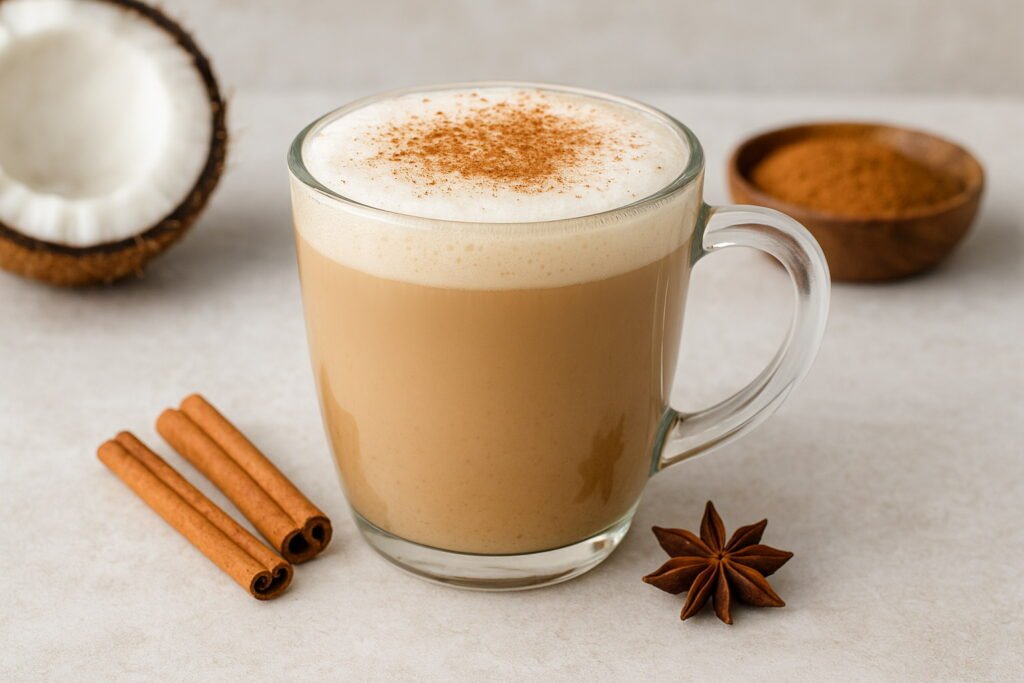
There’s something special about a warm mug of chai—the aroma of crushed spices, the earthy depth of tea, and the comforting creaminess that makes every sip feel grounding. When coconut milk steps in as the star, this beloved drink becomes even richer, naturally dairy-free, and wonderfully aromatic. That’s why a coconut milk chai latte recipe deserves a place in every home kitchen, whether you’re a chai enthusiast, avoiding dairy, or simply craving a flavorful alternative to coffee.
In this guide, you’ll explore how coconut milk transforms traditional chai into a luscious latte, what ingredients you’ll need, and how to build layers of flavor like a seasoned barista. Expect practical insights, spice facts, and small techniques that elevate this drink from an ordinary latte to a café-quality experience right at home.
In This Article
What Makes a Coconut Milk Chai Latte Unique
A coconut milk chai latte stands apart from classic chai for a few key reasons. While traditional versions rely on dairy for creaminess, coconut milk brings a natural sweetness and velvety texture without overpowering the tea. The tropical notes harmonize with warm spices in a way that feels luxurious yet balanced.
Why Coconut Milk Works So Well
Flavor synergy:
- Coconut milk adds gentle floral and buttery tones.
- Chai spices—cinnamon, ginger, cloves, cardamom—shine brighter against coconut’s smooth backdrop.
Diet-friendly benefits:
- Suitable for vegans and lactose-intolerant drinkers.
- Paleo-friendly and often easier to digest.
Texture advantages:
- When heated correctly, coconut milk becomes exceptionally silky.
- Full-fat canned varieties create a more indulgent latte, while lighter versions keep it refreshing.
The Experience
Chai has always been about comfort and ritual. Pairing it with coconut milk elevates that ritual—like wrapping yourself in a warm blanket with a hint of tropical sunshine.
“Great chai isn’t just brewed; it’s crafted through patience, warmth, and intention.”
Ingredients Overview for the Coconut Milk Chai Latte Recipe
A memorable coconut milk chai latte begins with intentional ingredient choices. Every component—from the tea leaves to the type of coconut milk—plays a role in shaping the final taste.
Essential Ingredients
| Ingredient | Purpose | Best Options |
| Black Tea | Provides the base flavor and caffeine | Loose-leaf Assam, CTC tea, or strong English breakfast |
| Coconut Milk | Creates the creamy latte texture | Full-fat canned for richness; carton for lighter version |
| Chai Spices | Build warmth & aroma | Cinnamon, cardamom, ginger, cloves, black pepper |
| Sweetener | Balances spices | Honey, maple syrup, coconut sugar |
| Vanilla (optional) | Adds depth and softness | Pure vanilla extract |
Fresh Spices vs. Chai Blend
- Fresh whole spices create the most vibrant aroma and authentic flavor.
- Pre-mixed chai blends save time and provide consistent results, especially for beginners.
Tip: If using whole spices, crush them lightly to release essential oils. A 5-second press with the back of a spoon is enough.
Choosing the Right Coconut Milk
The type of coconut milk dramatically shapes the latte:
| Type of Coconut Milk | Texture | Best For |
| Full-fat canned | Thick, luscious | Café-style lattes, dessert-like drinks |
| Lite canned | Medium body | Balanced, everyday lattes |
| Carton coconut milk | Light, airy | Iced chai lattes or a subtle coconut taste |
Coconut milk separates naturally, so always shake or whisk before use.
Step-by-Step Coconut Milk Chai Latte Recipe Instructions
Crafting a truly memorable coconut milk chai latte recipe is all about layering flavor. Each step plays a part—from blooming spices to frothing the coconut milk just right. Think of this process less as cooking and more as creating a warm, aromatic experience.
Step 1: Brew the Tea Base
A strong tea foundation ensures your latte doesn’t get overshadowed by coconut milk.
How to brew it:
- Heat 1 cup water until just below boiling.
- Add 1–1.5 teaspoons loose-leaf black tea or 1 strong tea bag.
- Steep 4–6 minutes.
- Strain and set aside.
Tip: Oversteeping can introduce bitterness. If you enjoy deeper flavor, increase tea quantity—not steep time.
Step 2: Infuse the Chai Spices
Your spice blend determines the character of your latte. You may use whole spices, ground spices, or a ready-made chai mix.
DIY Spice Mix (for one serving):
- 1 cinnamon stick
- 2 cardamom pods
- 2–3 black peppercorns
- 1–2 cloves
- ¼ teaspoon grated ginger
How to infuse:
- Lightly crush the whole spices.
- Simmer them in ½ cup water for 5–7 minutes to extract oils.
- Combine spice infusion with your brewed tea.
Optional: Add a splash of vanilla for extra roundness.
Step 3: Heat and Froth the Coconut Milk
Coconut milk behaves differently from dairy or oat milk, so handling it with care is key.
Steps for perfect froth:
- Warm ¾ cup coconut milk in a small pot over low–medium heat.
- Avoid rapid boiling—it can cause separation.
- Use a handheld frother, whisk, or blender to create foam.
- Aim for a silky, microfoam-like texture.
Why this matters: Frothing incorporates air, giving your latte that luxurious café-style body.
Step 4: Assemble the Latte
Once all components are ready:
- Pour the spiced tea into your mug.
- Add your desired sweetener (honey, maple, or coconut sugar).
- Gently pour in the steamed coconut milk.
- Spoon foam on top.
- Dust with cinnamon or nutmeg if desired.
A well-made latte should have a warm spice aroma, creamy mouthfeel, and balanced sweetness.
Tips for Perfecting Your Coconut Milk Chai Latte
Small mistakes can lead to curdling, watery texture, or weak flavor. These practical tips ensure every cup tastes like something you’d order at a high-end café.
Avoid Curdling Coconut Milk
- Keep heat low to medium—high heat breaks the emulsion.
- Add coconut milk after the tea is brewed, not during steeping.
- If using carton coconut milk, choose unsweetened varieties labeled “barista blend” for better stability.
Adjust Spice & Sweetness to Your Taste
Flavor customization is part of what makes this drink fun.
For stronger spice:
- Increase the simmer time by 1–2 minutes.
- Add an extra cardamom pod or pinch of ginger.
For lighter spice:
- Reduce black pepper and cloves first—they dominate quickly.
For sweetness control:
- Maple syrup gives caramel undertones.
- Honey adds floral notes.
- Coconut sugar blends seamlessly into warm drinks.
Frothing Tips for Creaminess
- Full-fat coconut milk produces the best foam but requires gentle handling.
- Shake or whisk the can before opening to mix the cream and liquid.
- Use a tall cup when frothing to avoid splashes.
Variations of the Coconut Milk Chai Latte Recipe
Experimenting with variations can give your coconut milk chai latte a fresh twist while staying true to its warm, comforting essence.
Iced Coconut Milk Chai Latte
This version is refreshing and perfect for warm climates.
How to make it:
- Brew a double-strength tea.
- Chill before mixing with cold coconut milk.
- Add ice and finish with a dash of cinnamon.
Dirty Coconut Chai Latte
For days when you want a caffeine boost, add espresso.
Great for:
- Morning energy
- Coffee lovers who enjoy chai’s warm spice profile
Use one shot of espresso per serving for balance.
Keto or Low-Sugar Variation
Swap traditional sweeteners with monk fruit, allulose, or erythritol syrup.
Use full-fat coconut milk to maintain creaminess without carbs.
Herbal or Caffeine-Free Version
Rooibos tea makes an excellent caffeine-free alternative with a naturally sweet, earthy flavor.
Alternative Tea Bases
Try these for unique profiles:
- Darjeeling: Floral and delicate
- Rooibos: Naturally sweet and caffeine-free
- Assam: Strong and malty—classic chai choice
Serving Suggestions for a Coconut Milk Chai Latte
A thoughtfully prepared coconut milk chai latte deserves an equally inviting presentation. How you serve your latte can elevate both the flavor experience and the visual appeal—especially important for food bloggers, café owners, or anyone who loves a polished homemade drink.
Beautiful Topping Ideas
Enhancements add aroma, texture, and café-style charm:
- Cinnamon Dusting: Classic, warm, and visually appealing.
- Freshly Grated Nutmeg: Adds a sweet, spicy top note.
- Star Anise: Works as a fragrant, decorative garnish.
- Coconut Flakes: Lightly toasted for crunch.
- Drizzle of Maple Syrup: Deepens the sweetness and color.
Food Pairings That Complement the Spices
Because chai’s spice profile is bold, pair it with snacks that either contrast or harmonize:
Great pairings include:
- Almond biscotti
- Banana bread
- Oatmeal cookies
- Warm muffins (cinnamon, pumpkin, or vanilla)
- Simple butter crackers or shortbread
Mugs & Presentation That Photograph Well
For blog photography or social media:
- Use matte ceramic mugs for an earthy aesthetic.
- Clear glass mugs highlight the latte layers and foam.
- Sprinkle spices last so they stay visible.
- Natural light near a window gives chai a warm, inviting glow.
A thoughtfully garnished chai latte can turn an ordinary moment into a ritual worth savoring.
Storage and Make-Ahead Instructions
One of the advantages of this chai latte is how well components can be made ahead. With the right preparation, you can enjoy a homemade coconut milk chai latte recipe in under a minute on busy mornings.
How to Store Chai Concentrate
If you prefer efficiency, prepare a larger batch of concentrated spiced tea.
How long it lasts:
- Refrigerator: Up to 5 days in a sealed jar.
- Freezer: Up to 2 months when stored in ice cube trays or airtight containers.
Tips:
- Strain all spices before storing to prevent bitterness.
- Shake well before using because natural sediment may form.
Storing Coconut Milk Mixtures
Coconut milk can separate over time, but this is normal.
Storage guidelines:
- Keep in the fridge for 2–3 days.
- Whisk or shake before reheating to recombine the fat and liquid.
Reheating for Best Texture
To preserve creaminess:
- Heat over low heat on the stovetop.
- Avoid microwaving on high—this can cause curdling.
- If microwaving, use short bursts of 10–12 seconds.
Pro Tip: Freeze chai concentrate in cubes and blend with coconut milk for a frosty chai frappé.
Health & Nutritional Notes
While a coconut milk chai latte feels indulgent, it offers a range of natural benefits. Understanding the nutritional profile helps you tailor the drink to your dietary goals.
General Nutrition Breakdown (Per 1 Serving)
| Component | Approx. Amount |
| Calories | 150–220 (depends on coconut milk type) |
| Fat | 10–16 g |
| Carbohydrates | 12–20 g |
| Sugars | Varies based on sweetener |
| Caffeine | 25–50 mg (tea strength dependent) |
These figures vary but give a helpful baseline for health-conscious readers.
Health Benefits of Key Ingredients
Coconut Milk:
- Rich in healthy fats that support energy and satiety
- Lactose-free and easy on digestion
Chai Spices:
- Cinnamon: May help support balanced blood sugar levels.
- Ginger: Known for soothing digestion and reducing nausea.
- Cardamom: Contains antioxidants that support circulation.
- Cloves: Provide antimicrobial properties.
- Black Pepper: Enhances nutrient absorption.
Black Tea:
- Contains antioxidants like polyphenols
- Offers mild caffeine for steady energy rather than a jolt
Dietary Notes
- Works for vegan, paleo, and dairy-free diets.
- Can be adapted for keto by using low-carb sweeteners.
- Gluten-free by nature.
“Chai is where comforting flavor meets functional wellness—every spice contributes both taste and purpose.”
Common Mistakes & Troubleshooting
Even a simple coconut milk chai latte recipe can go wrong if a few details are overlooked. Understanding common pitfalls helps you consistently produce a creamy, aromatic latte every time.
Why Your Latte Turns Out Watery
A weak or watery chai latte usually comes down to one of these factors:
- Tea too weak: Use strong black tea like Assam or CTC granules.
- Low-fat coconut milk: Carton varieties are thinner and produce a lighter body.
- Insufficient steeping time: Steeping black tea for less than 4 minutes reduces flavor intensity.
Fix: Double the tea leaves or switch to full-fat coconut milk.
Bitterness in the Tea
Bitterness is almost always caused by:
- Over-steeping black tea
- Using excessively high heat
- Not straining the spices early enough
Solution:
Steep tea no longer than 6 minutes and simmer spices separately before combining.
Spices Settling at the Bottom
This is normal with homemade chai but can be minimized:
- Strain spices thoroughly before adding coconut milk.
- Blend the chai for 5 seconds for an ultra-smooth texture.
- Use powdered cinnamon or ginger only at the surface for garnish.
Curdling or Separation
Coconut milk can separate when exposed to sudden temperature changes.
How to prevent it:
- Warm coconut milk slowly before combining with hot tea.
- Avoid boiling the coconut milk.
- Gently whisk after pouring to maintain creaminess.
FAQs About the Coconut Milk Chai Latte Recipe
A few recurring questions tend to come up when readers try their first homemade chai latte. Here are the most helpful answers.
Can I use boxed or refrigerated coconut milk?
Yes, but the texture will be lighter. For a café-style latte, canned full-fat coconut milk is ideal. Refrigerated carton coconut milk works best for iced versions or low-calorie options.
What’s the best way to make it caffeine-free?
Swap black tea with:
- Rooibos tea
- Herbal chai blends
- Decaf black tea
Rooibos delivers the most robust chai-like flavor profile without caffeine.
Can I make this without sweeteners?
Definitely. The natural sweetness of coconut milk is often enough. If you still want a hint of sweetness without sugar, try:
- Vanilla extract
- Dash of cinnamon
- A sprinkle of shredded coconut
How do I get more froth?
Use full-fat coconut milk and warm it slowly before frothing. A handheld frother gives the most consistent results. Avoid rapidly whisking cold milk—it won’t aerate properly.
Can I prepare the spices in advance?
Yes. Dry-spice blends can be stored up to six months in an airtight jar. Fresh ginger, however, should be added during simmering for best flavor.
Final Thoughts
A well-made coconut milk chai latte recipe brings together comfort, warmth, and nourishment in one cup. With the right spices, careful brewing, and quality coconut milk, you can easily recreate a café-worthy drink at home—one that feels indulgent while still aligning with dairy-free, vegan, or paleo lifestyles.
Whether you choose a cozy warm version, an energizing dirty chai, or a refreshing iced latte, each variation offers its own personality and charm. And once you experiment with spice blends and sweeteners, you may discover a signature chai latte that becomes a daily ritual.
For readers interested in the health benefits behind chai spices, reputable organizations like the Mayo Clinic offer accessible deep dives into how ingredients such as ginger and cinnamon support digestion and overall wellness.
A homemade chai latte isn’t just a drink—it’s a mindful moment, a calming pause, and a flavorful ritual you can return to again and again.