Paleo Thousand Island Salad Dressing brings a nostalgic, creamy flavor to modern clean eating. Known for its smooth texture, gentle tang, and subtle sweetness, Thousand Island dressing has long been a favorite for salads, burgers, dipping platters, and seafood. Creating a Paleo-compliant version allows you to enjoy this classic sauce without processed oils, refined sugars, or artificial preservatives.
The Paleo lifestyle centers on real, whole foods: healthy fats, fresh produce, and minimally processed ingredients. Traditional Thousand Island dressing doesn’t meet those standards because it usually contains soybean oil–based mayonnaise, refined sugar, and stabilizers. A Paleo upgrade keeps everything people love about the original—its richness, balance, and versatility—while replacing problem ingredients with nutrient-dense alternatives.
This article explores how to craft the perfect Paleo Thousand Island Salad Dressing at home, what ingredients matter most, and how to tailor it to your taste. Whether you’re meal prepping or looking for the perfect sauce for a lettuce-wrapped burger, this dressing can truly become a weekly staple.
What Makes Thousand Island Dressing Non-Paleo & How to Fix It
Classic Thousand Island dressing you’ll find on grocery shelves is far from Paleo-friendly. Understanding why helps you make smart substitutions that preserve both flavor and nutrition.
Common Non-Paleo Ingredients in Traditional Thousand Island Dressing
| Ingredient | Why It’s Not Paleo | Paleo-Friendly Swap |
| Soybean or canola oil-based mayo | Processed seed oils, inflammatory | Avocado-oil mayo or homemade egg mayo |
| Refined sugar or high fructose corn syrup | Non–whole food sweeteners | Raw honey, date paste, or apple juice concentrate |
| Conventional ketchup | Added sugar, artificial ingredients | Paleo ketchup or tomato paste + natural sweetener |
| Relish with preservatives | Additives, dyes | Diced fermented pickles |
| Stabilizers & gums | Highly processed additives | None needed—use real whole ingredients |
These swaps not only bring the dressing in line with Paleo principles but often enhance the flavor. Pickles fermented in brine instead of vinegar bring probiotics. Avocado-oil mayo delivers healthy fats. Natural sweeteners add complexity instead of simple sweetness.
How These Paleo Swaps Maintain Taste & Texture
- Healthy fat from avocado oil keeps the dressing luxuriously creamy.
- Tomato paste builds umami without fillers.
- Fermented pickles provide crunch and a brighter tang.
- Honey or date paste balances acidity without overwhelming sweetness.
Together, these changes keep the iconic “Thousand Island” flavor while dramatically upgrading ingredient quality.
Core Ingredients in Paleo Thousand Island Salad Dressing
Crafting the best Paleo Thousand Island Salad Dressing comes down to balancing creaminess, acidity, sweetness, and texture. Each ingredient plays a crucial role in achieving that signature harmony.
Essential Components
Paleo Mayonnaise
This forms the base of the dressing. You can use:
- Homemade mayo made with avocado oil, egg yolk, lemon juice, and salt
- Store-bought Paleo mayo containing only avocado oil, eggs, and simple seasonings
Tomato Paste or Paleo Ketchup
Tomato paste brings depth, while Paleo ketchup gives a familiar tang and slight sweetness. Choose based on the flavor intensity you prefer.
Pickles & Brine
Dill pickles chopped finely add texture and brightness. A teaspoon of pickle brine enhances acidity naturally.
A Touch of Natural Sweetener
Raw honey, date syrup, or a tiny amount of apple juice concentrate softens the dressing’s edges without relying on processed sugar.
Acid for Balance
Lemon juice or apple cider vinegar adds clarity and keeps the dressing lively.
Finely Minced Aromatics
- White or yellow onion
- A hint of garlic
- Paprika for warmth
Flavor-Building Spice Ideas
- Smoked paprika to deepen richness
- Black pepper for mild heat
- Cayenne if you enjoy a punchier finish
These ingredients, when combined thoughtfully, create a Paleo-friendly version that maintains the dressing’s nostalgic charm while elevating its nutritional value.
How to Make Paleo Thousand Island Salad Dressing (Step-by-Step Guide)
Creating Paleo Thousand Island Salad Dressing at home requires only a few minutes and a handful of clean ingredients. The real key is achieving the right balance: creamy, tangy, slightly sweet, and textured with finely chopped pickles.
Ingredients (Paleo-Friendly)
- 1 cup avocado oil mayonnaise (homemade or high-quality store-bought)
- 2 tbsp Paleo ketchup or 1 tbsp tomato paste + ½ tsp raw honey
- 2 tbsp finely chopped fermented dill pickles
- 1 tsp pickle brine
- 1–2 tsp lemon juice or apple cider vinegar
- 1 tbsp finely minced white onion
- ¼ tsp paprika (smoked or sweet)
- Pinch of sea salt and freshly ground black pepper
- Optional: pinch of cayenne for subtle heat
Step-by-Step Instructions
Mix the base.
Combine the mayonnaise, ketchup or tomato paste mixture, and lemon juice in a medium mixing bowl. Stir slowly to create a smooth and creamy foundation.
Fold in the texture.
Add finely chopped pickles and minced onion. These contribute crunch and brightness, helping the dressing taste fresh rather than heavy.
Season thoughtfully.
Sprinkle in paprika, sea salt, and black pepper. Add a tiny amount of cayenne if you enjoy a mild kick.
Adjust consistency.
If it’s too thick, a splash of pickle brine thins it while adding extra tang. If it’s too thin, a spoonful of mayo will bring it back to the proper density.
Rest for flavor development.
Allow the dressing to chill for at least 30 minutes. The flavors settle, the texture improves, and the aromatics mellow beautifully.
Pro Tips for Perfect Emulsification
- Stir with a silicone spatula instead of vigorously whisking to avoid breaking the mayo.
- For deeper flavor, use homemade Paleo ketchup with a touch of smoked paprika.
- A drop of lemon juice brightens the overall taste without making it sour.
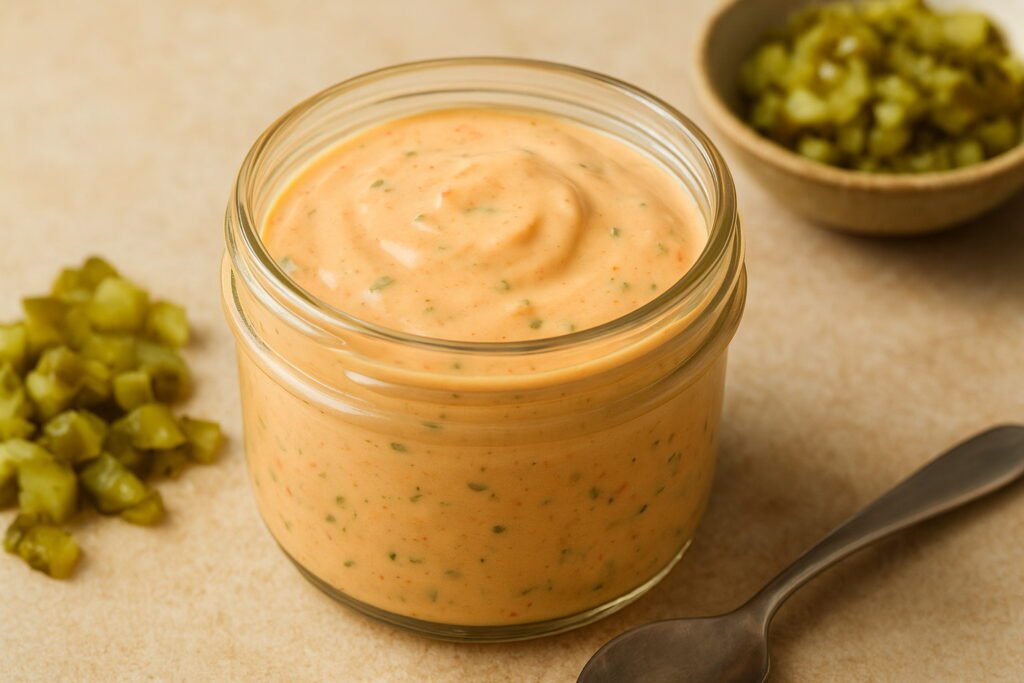
A well-made batch should be creamy, balanced, and visually speckled with paprika and pickle bits—exactly what makes Thousand Island dressing irresistible.
Flavor Variations of Paleo Thousand Island Salad Dressing
One of the strengths of Paleo Thousand Island Salad Dressing is its adaptability. You can customize it to match different dishes without losing the essence of the original.
Popular Variations
Smoky Version
- Add ½ tsp smoked paprika
- Use a dash of chipotle powder
- Best for grilled meats, roasted sweet potatoes, or BBQ-style bowls
Spicy Version
- Add ¼–½ tsp cayenne or minced jalapeño
- Increase lemon juice by a splash for balance
- Works beautifully with shrimp, taco salads, or spicy chicken wraps
Dill-Pickle Heavy Version
- Double the chopped pickles
- Add extra pickle brine for sharper acidity
- Ideal for burger salads or lettuce-wrapped sandwiches
Low-Sweetness Version
- Skip honey entirely
- Use tomato paste instead of Paleo ketchup
- Reduces sugar content while keeping the classic taste
Maintaining Paleo Compliance
To keep your variations true to Paleo guidelines:
- Avoid any pickles containing sugar or preservatives.
- Stay with avocado oil mayo—no seed oils.
- Avoid store-bought dressings or ketchups unless they’re specifically Paleo-approved.
Experimenting with variations ensures your dressing pairs well with different meals while staying entirely within the boundaries of clean eating.
Best Ways to Use Paleo Thousand Island Salad Dressing
This dressing is far more versatile than most people realize. Its creamy texture and balanced flavor profile make it useful in dozens of dishes—not just salads.
Creative & Paleo-Friendly Ways to Use It
As a Classic Salad Dressing
Perfect for mixed greens, chopped salads, and hearty bowls with chicken or salmon.
As a Dip
Great for:
- Sweet potato fries
- Fresh vegetable sticks
- Crispy chicken tenders (almond flour crusted)
On Lettuce-Wrapped Burgers
A Paleo alternative to the popular “secret sauce” found in many burger joints. Its tang and creaminess elevate every bite.
For Paleo Reuben Bowls
Drizzle over:
- Shredded corned beef
- Sauerkraut
- Roasted potatoes or cauliflower
- Fresh herbs
This turns a traditionally bread-heavy dish into a satisfying Paleo comfort meal.
With Seafood
Pairs nicely with:
- Grilled shrimp
- Baked cod or salmon
- Cold seafood platters
Roasted Vegetables
Try it on carrots, cauliflower, zucchini, or asparagus. The dressing adds contrast and richness to earthy vegetables.
Case Study: Meal Prep Success
A health-conscious meal-prepper, Ana, began adding Paleo Thousand Island Salad Dressing to her weekly rotation. She found that:
- Her salads stayed exciting rather than repetitive
- The dressing kept well for several days
- She reduced cravings for sugary sauces
This small change helped her stay consistent with Paleo eating while enjoying more flavorful meals.
Storage, Shelf Life & Make-Ahead Tips for Paleo Thousand Island Salad Dressing
A well-made batch of Paleo Thousand Island Salad Dressing keeps beautifully when stored correctly. Proper storage not only preserves flavor but also maintains the creamy texture that makes this dressing so versatile.
How Long It Lasts
In an airtight glass jar, the dressing stays fresh in the refrigerator for 5–7 days. Because it contains real mayonnaise and no artificial stabilizers, it shouldn’t be stored longer than a week. Always use clean utensils when scooping to avoid introducing bacteria.
Ideal Storage Containers
- Glass mason jars – airtight, non-reactive, and great for shaking before use.
- Small Weck jars – stackable and perfect for single-serve portions.
- Glass meal-prep containers – convenient for weekly batch cooking.
Make-Ahead Tips
- Prepare your Paleo mayo first, then assemble the dressing.
- Store the pickles separately if you prefer extra crunch and mix them in right before serving.
- Double the recipe and divide into individual jars for quick lunches.
- If the dressing thickens in the fridge, stir in a splash of pickle brine or lemon juice to revive the consistency.
Signs of Spoilage
Watch for:
- Sour or sharp off-smells
- Separation that doesn’t mix back together
- Discoloration or visible mold
If any of these appear, discard immediately. With whole-food ingredients, freshness is essential for both safety and flavor.
Nutritional Benefits of Paleo Thousand Island Salad Dressing
Unlike conventional store-bought dressings filled with preservatives and seed oils, Paleo Thousand Island Salad Dressing provides real nutritional value. Every ingredient contributes something beneficial to your overall wellness.
Key Health Benefits
Healthy Fats from Avocado Oil
Avocado oil features a high percentage of monounsaturated fats, known for supporting heart health and stable energy levels.
No Seed Oils
Avoiding soybean, canola, and other refined oils reduces inflammation and improves nutrient absorption.
No Refined Sugars
Sweetness comes from raw honey or dates—whole-food sweeteners that add minerals and antioxidants rather than empty calories.
Probiotic-Rich Pickles
If you choose fermented pickles, you add gut-friendly bacteria that support digestion and immunity.
Sample Nutritional Breakdown (Per 2 tbsp serving)
| Nutrient | Approx. Amount | Benefits |
| Calories | 110–130 | Energy source |
| Total Fat | 10–12g | Supports hormones & brain health |
| Carbohydrates | 2–4g | Naturally occurring from tomato/pickles |
| Protein | 0–1g | Minimal, typical for dressings |
| Added Sugar | 0g | Paleo-friendly |
These values may vary depending on your exact ingredients, but overall, the dressing remains nutrient-dense and Paleo-compliant.
Troubleshooting & FAQs for Paleo Thousand Island Salad Dressing
Even seasoned home cooks occasionally run into small issues when crafting homemade dressings. Fortunately, most problems have simple fixes.
Common Issues & Solutions
“My dressing is too thick.”
Add 1–2 teaspoons of pickle brine or lemon juice and stir gently.
“It’s too runny.”
Mix in an extra spoonful of Paleo mayo until it thickens to your liking.
“The dressing tastes too sweet.”
Increase acidity with ½ teaspoon lemon juice or apple cider vinegar.
“It’s too tangy.”
Stir in a small amount of raw honey or add an extra tablespoon of mayo.
“Can I make this egg-free?”
Yes—use an egg-free Paleo mayo (often made from aquafaba or avocado). Check labels to avoid seed oils.
“Can I use coconut sugar?”
Not recommended for this recipe because it alters both color and flavor. Stick to honey, date paste, or no sweetener.
Frequently Asked Questions
Is store-bought Paleo mayo good enough?
Absolutely. Look for brands with avocado oil, eggs, and minimal ingredients.
Can I freeze the dressing?
Freezing is not recommended. Mayo-based dressings separate once thawed.
What’s the best pickle type?
Fermented dill pickles offer the brightest flavor and the best crunch.
Conclusion: Why Paleo Thousand Island Salad Dressing Belongs in Your Kitchen
Paleo Thousand Island Salad Dressing is more than a nostalgic favorite—it’s a versatile, clean-eating sauce that elevates salads, burgers, bowls, and seafood without compromising your Paleo lifestyle. With simple whole foods, nutrient-dense fats, and flexible variations, this dressing becomes a staple you can rely on week after week.
Whether you’re meal prepping, creating healthier versions of classic dishes, or simply wanting a sauce that tastes indulgent without the additives, this dressing delivers on every level. Clean ingredients, customizable flavor, and everyday versatility make it a must-have for any Paleo kitchen.
For additional guidance on choosing whole-food ingredients and Paleo-approved products, resources such as Harvard’s Nutrition Source provide excellent foundational information (https://www.hsph.harvard.edu/nutritionsource).